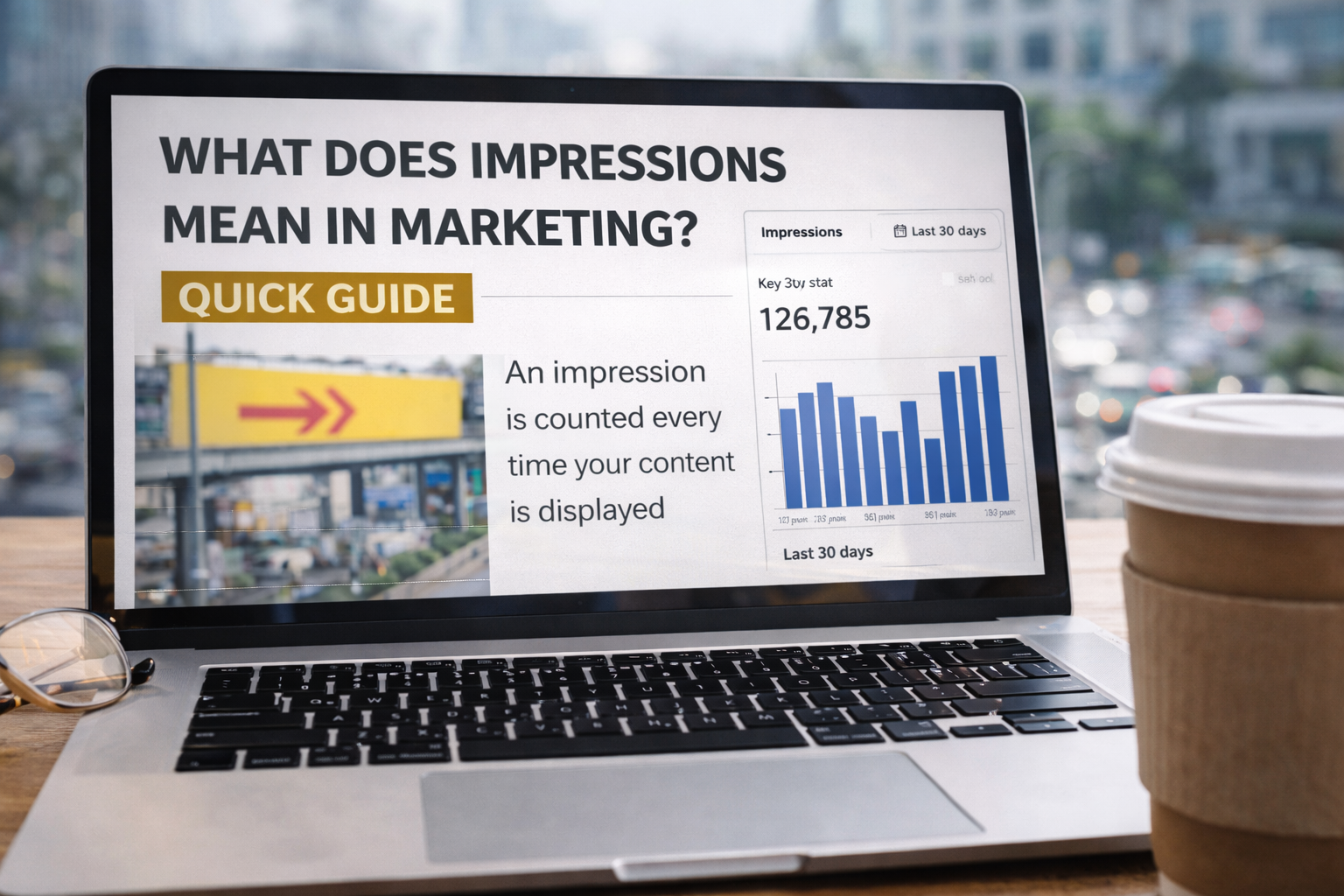
Think of an impression as the moment your content simply appears on someone’s screen.
That’s it. It’s the digital version of a billboard flashing past a driver on the highway.
Every single time it’s shown, that’s one impression.
This metric is the very first domino to fall. Before anyone can engage with your content, they have to see it first.
So, What Are Impressions, Really?

Let’s break it down. Impressions are all about visibility. Before a click, a save, or a share can happen, your content has to pop up on someone’s feed, in their search results, or on a category page.
That first appearance is the impression.
It’s a measure of exposure, not action. If one person scrolls past your Pinterest Pin five different times today, that single user just generated five impressions.
This distinction is critical because it tells you how often a platform’s algorithm is putting your content out there.
A high number of impressions is usually the first green flag that the platform thinks your content is relevant and is pushing it to users.
The Foundation of Your Content’s Success
Impressions sit at the very top of your marketing funnel. Nothing else happens without them. They are the starting line for:
- Brand Awareness: Simply getting eyeballs on your brand and content.
- Algorithmic Approval: High impressions tell platforms that your content is resonating and should be shown more often.
- Testing and Tweaking: You need impressions to gather enough data to see which headlines, images, and ideas actually grab attention.
Impressions measure potential. They represent every single opportunity your content had to catch someone’s eye and make an impact.
A steady stream of impressions is the fuel that keeps your entire content strategy running.
Getting a handle on this metric is the first real step in figuring out how to measure content performance, because it sets the stage for every click, save, and share that might come next.
Impressions vs Reach: Understanding the Critical Difference
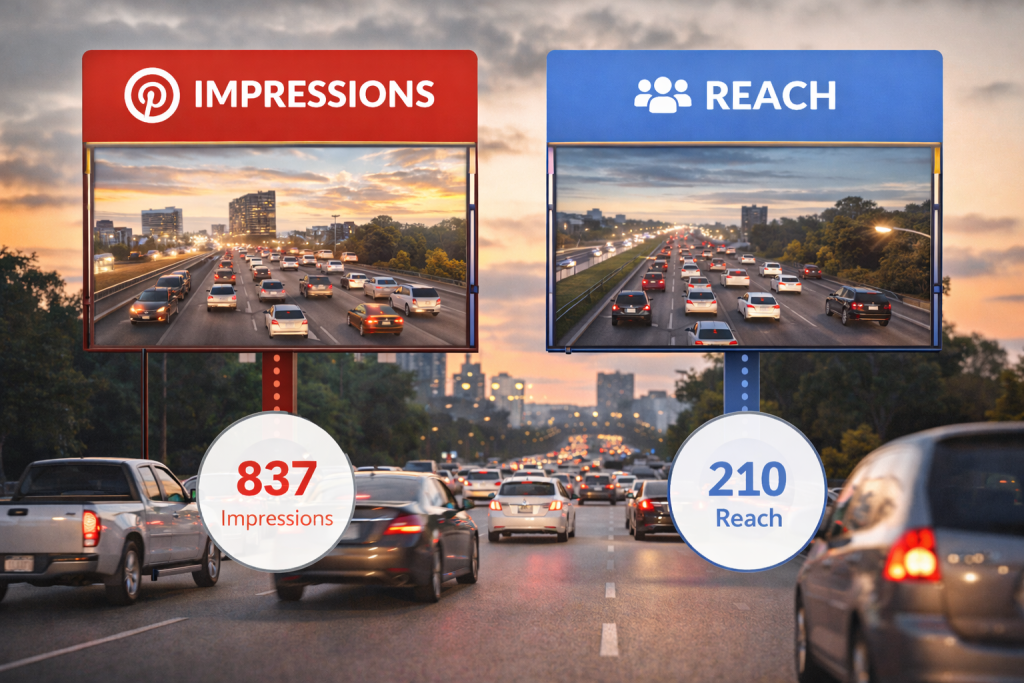
This is where a lot of people get tripped up. Impressions and reach both tell you something about who saw your content, but they tell very different stories.
Getting the distinction right is key to actually understanding how your posts are performing.
Think back to that highway billboard analogy.
If impressions are the total number of times your billboard was seen, reach is the number of unique cars that drove past it. One car driving by five times?
That’s five impressions, but a reach of only one. Simple, right? But the implications are huge.
A Tale of Two Audiences
Let’s play this out. If you see high impressions but a surprisingly low reach, it means a small, dedicated group of people are seeing your content over and over.
This isn’t necessarily a bad thing! It can be fantastic for drilling a message home or building deep brand recognition with a core audience.
On the flip side, if your reach number is almost as high as your impressions, you’re getting your content in front of a wide variety of new faces, but they probably only saw it once.
This is perfect for a big brand awareness push where the main goal is just to get your name out there.
Understanding this difference is a cornerstone of learning how to measure marketing success in a meaningful way.
An impression is a view. Reach is a viewer. While impressions measure the frequency of your content, reach measures the size of your audience.
This isn’t just a social media thing, either. Impressions are a fundamental KPI across all digital advertising, telling you how visible your ads are.
For instance, retail media ad impressions have jumped by 28% year-over-year, which shows just how much brands rely on this metric to see if their campaigns are even being seen.
To make this crystal clear, here’s a simple table breaking down the two metrics.
Impressions vs Reach: a Side-by-Side Comparison
This table offers a clear breakdown of the key differences between impressions and reach, helping you choose the right metric for your campaign goals.
| Metric | What It Measures | How It Is Counted | Primary Goal |
|---|---|---|---|
| Impressions | The total number of times your content was displayed | Every single time a piece of content is shown on a screen | Brand Reinforcement, Message Frequency |
| Reach | The total number of unique users who saw your content | Once per unique user, no matter how many times they see it | Brand Awareness, Audience Growth |
Ultimately, you need both metrics to get the full story. They work together to paint a complete picture of your content’s journey.
To really nail this down, it’s also helpful to dig a bit deeper into the other side of the coin and understand What Is Social Media Reach? in more detail.
Having a solid grasp on both concepts is what keeps you from misreading your own data and making the wrong calls.
Why Impressions Are a Key Growth Metric
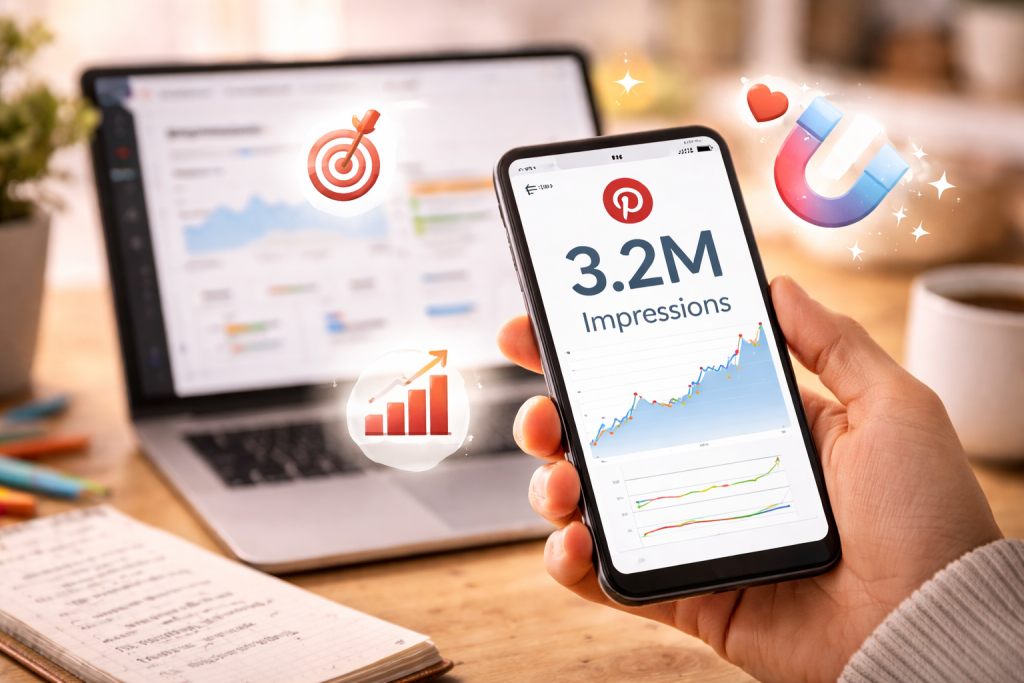
It’s easy to dismiss impressions as just another vanity metric, but they’re actually a vital sign for your content’s health and potential to grow.
Think of them as a leading indicator of your brand awareness and visibility. They tell you how often a platform’s algorithm is actually putting your content in front of people.
A high impression count is the first clue that the algorithm likes what you’re doing and is actively pushing your content out.
This consistent exposure taps into a powerful psychological principle called the “mere-exposure effect”—the more people see something, the more they tend to like it.
Each impression, even without a click, builds brand recall and trust over time.
The Strategic Value of Visibility
Impressions lay the foundation for everything else. You can’t get a click, a save, or a follow without the view first.
This initial visibility is also critical for running effective A/B tests. You need enough impressions to gather the data that tells you which headlines, images, or calls-to-action are actually stopping the scroll and grabbing your audience’s attention.
Just look at the global advertising world—this metric is everything for gauging a campaign’s impact. Digital channels now pull in 72.7% of all ad investment worldwide, which is over $790 billion in online spending.
That huge number shows just how fundamental impressions are to measuring success in the digital space.
Impressions are the currency of visibility. A high count means the algorithm is investing in your content’s potential, creating opportunities for awareness, trust, and eventual action.
This concept map helps break down the difference between impressions and reach. Impressions count every single time your content is seen, while reach only counts the unique people who see it.
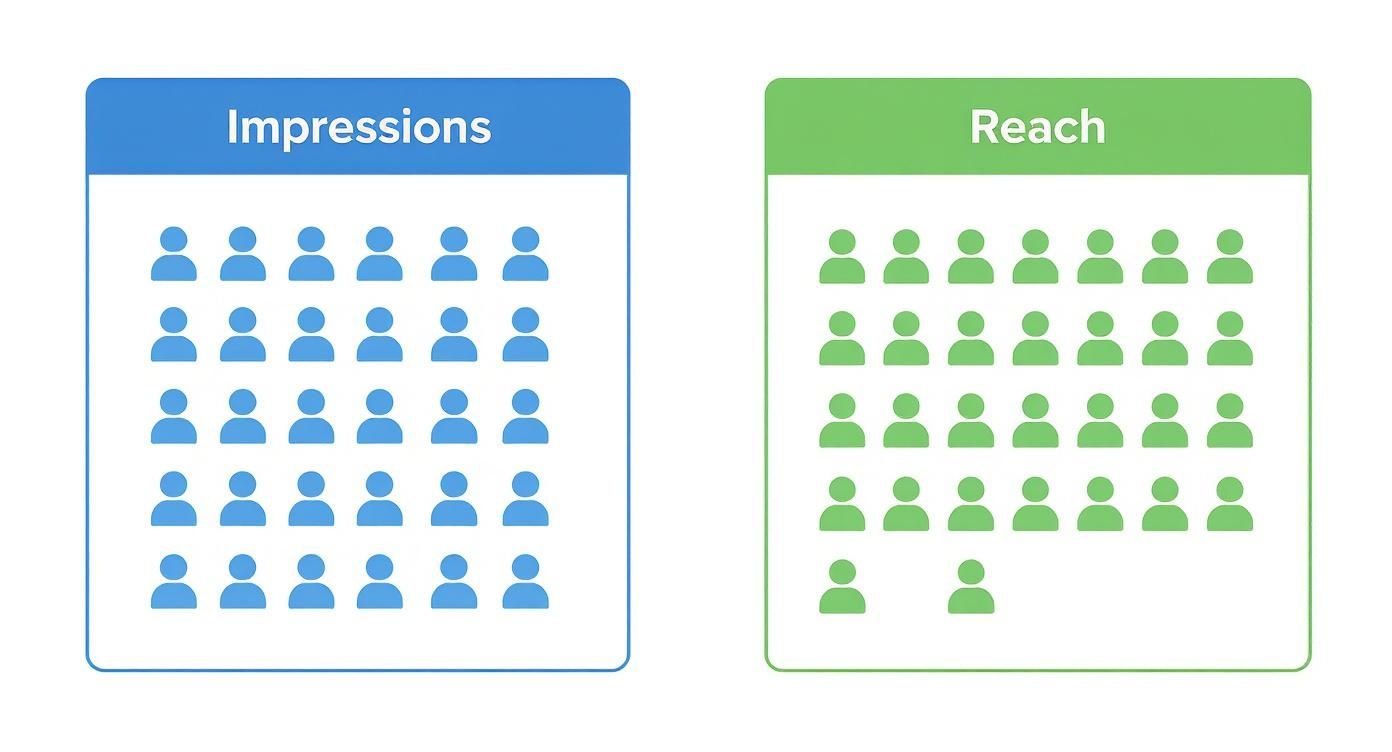
The main thing to remember is that impressions are all about the frequency of exposure. That repetition is what builds familiarity and hammers your brand message home.
To get a fuller picture of what drives success online, it’s worth exploring all the essential social media marketing metrics.
How Pinterest Uses Impressions to Drive Discovery
While impressions count on any social platform, they have a completely different job on Pinterest. Think about it: a post on most social feeds is here today, gone tomorrow.
A Pin, however, can keep driving traffic for months—sometimes even years.
This evergreen quality makes impressions on Pinterest a true powerhouse metric for long-term growth, not just a fleeting vanity number.
Every single time your Pin shows up on someone’s screen—whether it’s in their home feed, a search result, or on another user’s board—that’s one impression.
You can think of it as the very first signal your content sends to the Pinterest algorithm. It’s the platform’s way of dipping a toe in the water to see if your Pin has what it takes.
A big spike in impressions right after you publish is a great sign. It tells the algorithm that your Pin is visually grabbing and relevant to what people are looking for, which encourages Pinterest to show it to even more users.
On Pinterest, impressions aren’t just “views.” They’re a crystal ball for a Pin’s future value. High impressions today almost always lead to steady traffic and engagement for months down the line.
This is why understanding what impressions mean on Pinterest is so critical for anyone trying to build a brand on the platform.
Turning Visibility Into Evergreen Value
The whole lifecycle of a Pin is different, and that changes how you should look at your analytics. It’s less about a quick viral hit and more about building a library of content that works for you over the long haul.
- The Algorithm’s Test: Impressions are basically Pinterest’s way of testing your Pin’s appeal. If they’re high, it means your visuals and keywords are hitting the mark.
- The First Step to Action: Nobody can click your link, save your Pin, or follow you without seeing your content first. Impressions are the top of that funnel, creating the opportunity for every other action.
- The Engine for Discovery: A Pin that consistently gets impressions becomes a reliable traffic source, driving new people to your brand long after you hit “publish.”
And this isn’t just about getting seen. We’re talking about real business impact. With 85% of weekly Pinners saying they’ve bought something based on Pins from brands, every impression is the potential start of a new customer relationship.
Your goal isn’t just to get the impression, but to create a Pin so compelling that it earns the click or the save that comes next.
By focusing on creating content that gets strong initial impressions, you’re giving the Pinterest algorithm exactly what it needs to turn your Pin into an evergreen asset that works for you 24/7.
Using Impression Data to Refine Your Strategy
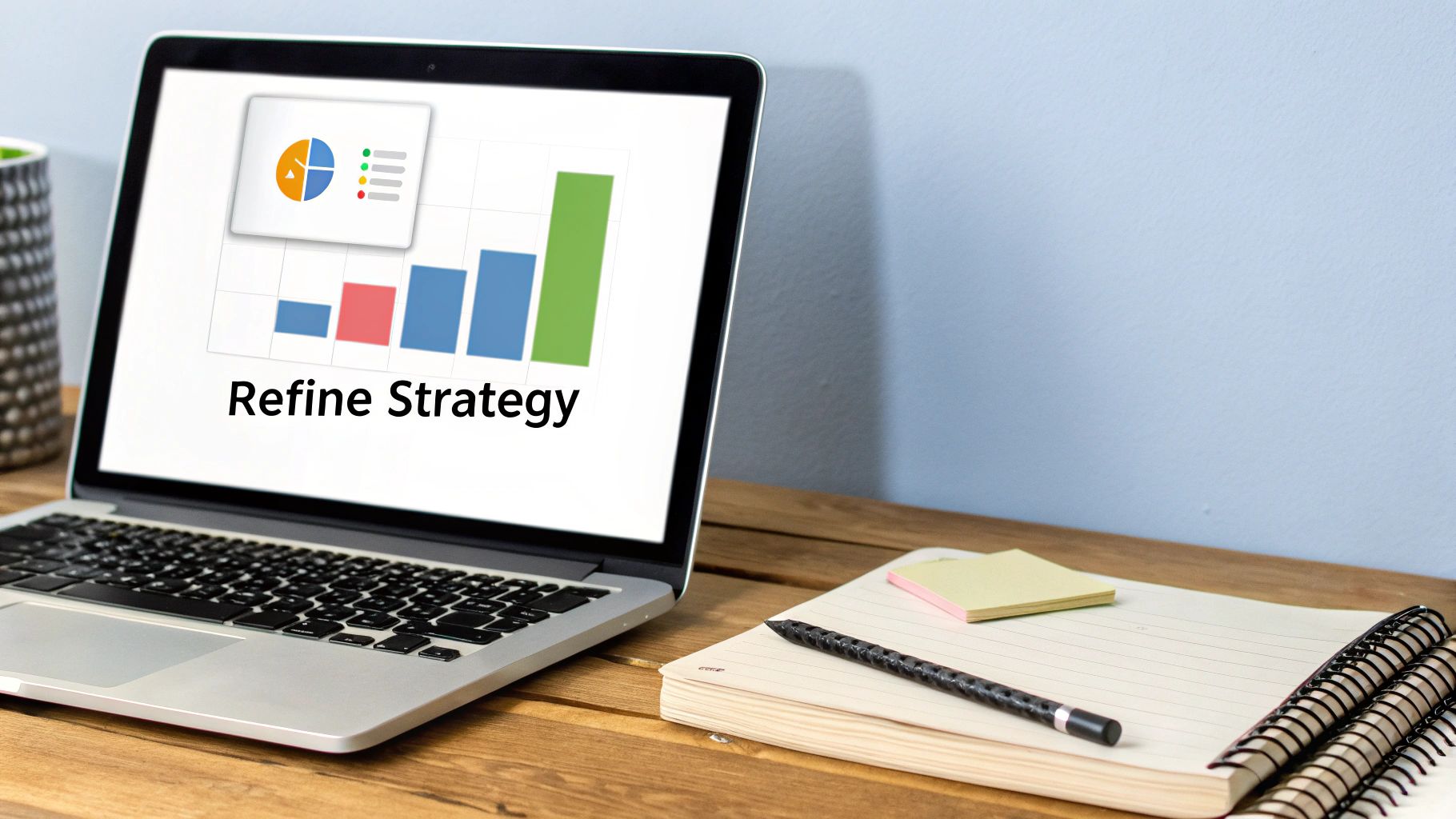
Knowing what an impression is is just the starting line. The real magic happens when you use that data to make smarter decisions.
By keeping a close eye on your impression trends, you can spot which pieces of content are catching fire with the platform’s algorithm.
Think of it this way: when you see a Pin suddenly take off and get a huge spike in impressions, it’s a major clue.
It’s time to put on your detective hat and figure out why. Was it the eye-catching image? The specific keywords you used in the description? Maybe it was just the perfect board at the perfect time.
When you pinpoint what made that Pin a winner, you’ve found a repeatable recipe for success.
Turning Insights into Action
Once you’ve identified what’s working, you can stop guessing and start creating content you know has a better chance of performing well. This is where your impression data becomes your roadmap.
Here are a few practical ways to act on what you’ve learned:
- Repin and Reshare: Is a Pin getting a ton of impressions? Don’t let that momentum die. Repin it to your other relevant boards to get it in front of even more people.
- Create Lookalike Content: Take what you learned and apply it to new Pins. Use similar visual styles, color palettes, or headline formulas that have already proven to be effective.
- Optimize Your Keywords: If certain keywords are bringing in the views, use them again! Weave those same successful keywords and phrases into your new Pin titles and descriptions to boost their chances of being discovered.
Your impression data is basically a direct message from the algorithm. It’s telling you exactly what kind of content it wants to show to more people.
When you start listening to these signals, you’re no longer just collecting data. You’re building a content strategy that consistently grabs attention and gets real results.
Turn Searches Into Impressions Faster
If you want more impressions, you need the words people are actually searching—not guesses. Pinterest impressions are strongly tied to discoverability, and discoverability starts with keyword selection.
Use our free Pinterest Keyword Research tool to uncover high-intent keywords, spot trending phrases, and build a simple keyword list you can plug into your Pin titles, descriptions, and board names.
You’ll spend less time brainstorming and more time publishing Pins that get shown.
Answering Your Top Questions About Impressions
Alright, let’s clear up a few of the most common questions that pop up when talking about impressions. Getting these concepts down will help you make smarter decisions with your own social media strategy.
Are More Impressions Always Better?
Not on their own. It’s tempting to chase a huge impression number, but if those views don’t lead to anything, they’re just vanity metrics.
Think of it like putting up a billboard on a highway where none of your ideal customers ever drive. You might get a million impressions, but they’re from the wrong people.
The sweet spot is pairing high impressions with a solid engagement rate. If you’re getting tons of views but hardly any clicks or saves, it’s a red flag.
It might mean your visuals grabbed attention, but the content itself didn’t connect with the audience that saw it. That’s your cue to rethink your targeting or sharpen your message.
Can My Impressions Be Higher Than My Follower Count?
Yes, and that’s exactly what you want to see! If your impression count is higher than your follower count, it’s a fantastic sign. This is especially true on discovery platforms like Pinterest.
This happens when your content breaks free from your immediate circle of followers. Every time someone shares your pin, or when the algorithm shows it to new people who share similar interests, you rack up impressions from users who have never heard of you. That’s how real growth happens.
The Bottom Line: Impressions show your content’s total exposure, not just how it did with your current followers. A big gap between impressions and followers is a clear signal of healthy, organic reach.
So, How Do I Get More Impressions?
Getting more impressions is all about playing nice with the platform’s algorithm. You need to create content that the algorithm is genuinely excited to share. This isn’t just a social media thing; it’s a core metric everywhere, including the booming digital video and audio ad markets.
For instance, digital video ad spending is on track to jump by 14%, reaching a massive $72.4 billion. You can explore more digital marketing statistics to see just how big this is.
Here are a few tried-and-true methods to boost your visibility:
- Nail Your Keywords: Think like your audience. Use the exact words and phrases they’d search for in your pin titles, descriptions, and even your profile bio.
- Create Scroll-Stopping Visuals: On a platform like Pinterest, this is non-negotiable. Your image or video has to be compelling enough to make someone stop scrolling. That’s what earns you the impression in the first place.
- Jump on Trends: Using trending topics, audio, or formats gives the algorithm a timely reason to push your content out to a much broader audience.