Pinterest has evolved from a simple digital scrapbook into a powerful visual discovery engine where millions of users actively plan their purchases, from nightly dinners to major life events.
For businesses, this presents a golden opportunity not just to be seen, but to become an integral part of their customers’ decision-making journey.
However, succeeding on this platform in 2025 requires more than just pinning attractive images. It demands a sophisticated approach, a blend of art and science, creativity and data.
Effective Pinterest marketing strategies are the key to unlocking this potential, transforming casual browsers into loyal customers and driving significant, high-intent traffic to your website. But with algorithm updates and ever-changing user behavior, which tactics actually deliver tangible results?
This guide cuts through the noise.
We will provide a curated collection of proven, actionable Pinterest marketing strategies designed to elevate your brand’s presence.
You will learn how to:
- Master Pinterest SEO to dominate search results.
- Leverage Rich Pins for enhanced user experience and clicks.
- Integrate e-commerce features directly for seamless shopping.
- Utilize data to refine your content and advertising efforts.
Whether you’re a social media manager at a digital marketing agency, an e-commerce entrepreneur, or a blogger aiming to amplify your reach, these insights will provide a clear roadmap for success. Let’s dive into the strategies that will turn your Pinterest profile into a powerful marketing asset.
10 Effective Pinterest Marketing Strategies
Learn different Pinterest Marketing Strategies focusing on specific, implementation-ready insights that will help you engage your target audience and generate measurable growth.
1. Pinterest SEO Optimization

One of the most foundational yet powerful pinterest marketing strategies is treating the platform not just as a social network, but as a visual search engine.
Pinterest SEO Optimization involves strategically using keywords to ensure your profile, boards, and Pins appear in relevant user searches, both on Pinterest and in Google search results.
This approach transforms your content from a passive display into an active magnet for organic traffic, making it discoverable long after it’s initially published.
How It Works
The core principle is to align your content with the specific terms and phrases your target audience uses when searching for ideas, products, or inspiration.
By embedding these keywords in key locations, you signal to Pinterest’s algorithm what your content is about, boosting its visibility. This is crucial for long-term growth, as an optimized Pin can continue driving traffic for months or even years.
For example, a home improvement brand can target high-intent keywords like “small bathroom remodel ideas” or “budget-friendly kitchen updates.”
A fashion blogger might focus on trending terms like “cottagecore aesthetic” or seasonal phrases like “fall wedding guest dresses.” The goal is to capture users at the exact moment they are looking for a solution or idea you provide.
Actionable Implementation Tips
To effectively implement Pinterest SEO, follow a structured approach:
- Keyword Research: Use the Pinterest Trends tool and the search bar’s auto-suggest feature to identify popular and relevant keywords. Look for terms with high search volume that match your niche.
- Strategic Placement: Integrate your primary and secondary keywords naturally into your Pin titles, Pin descriptions (especially the first 100 characters), board titles, and board descriptions.
- Profile Optimization: Ensure your profile name and bio clearly state what you do and include your most important keywords.
The infographic below highlights the key performance indicators to track when measuring the success of your SEO efforts.
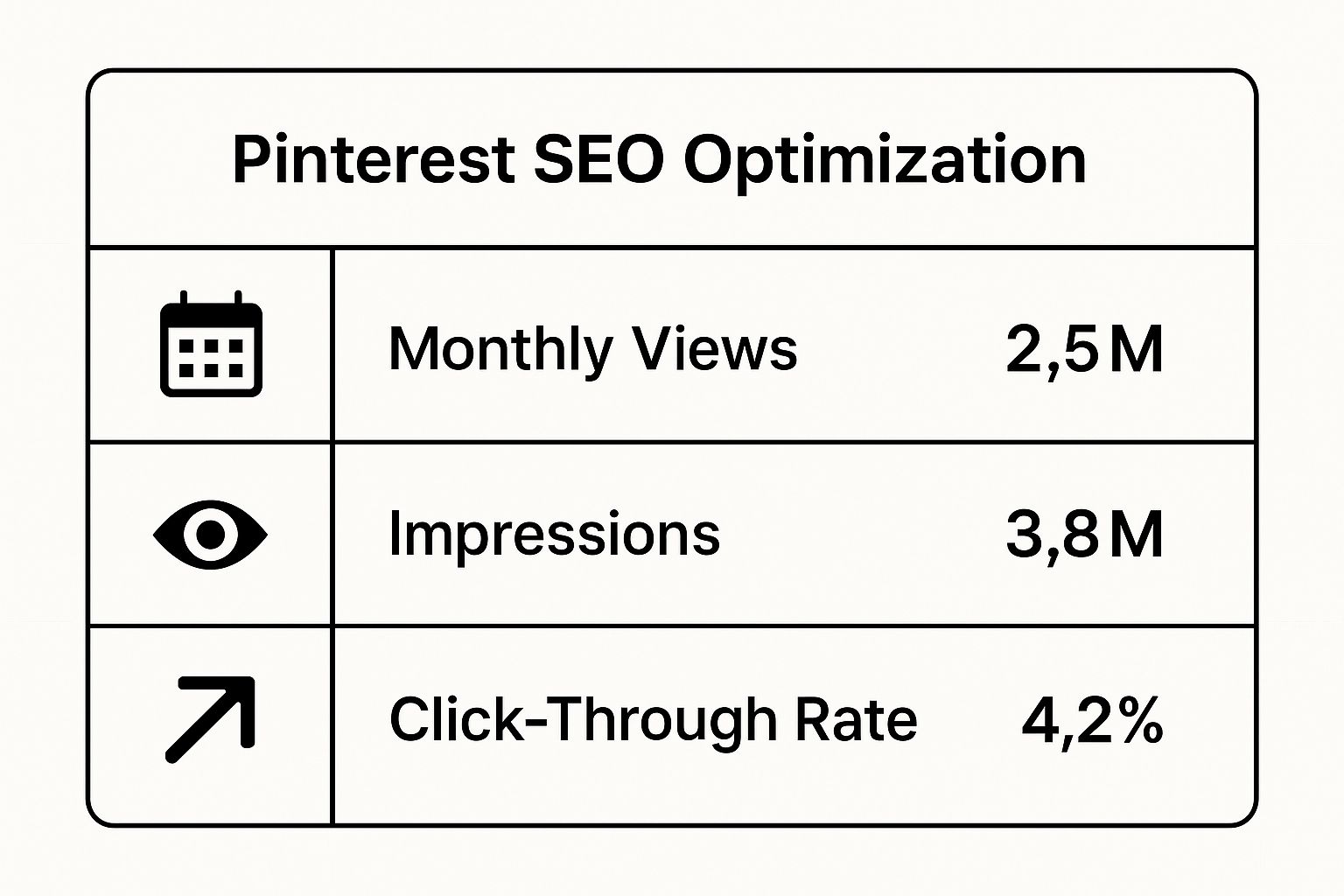
Tracking these metrics within your Pinterest Analytics will reveal which keywords are driving the most visibility and engagement, allowing you to refine your strategy continuously.
2. Rich Pins Strategy

Beyond standard Pins, a more advanced and effective pinterest marketing strategy involves leveraging Rich Pins.
These enhanced Pins automatically sync real-time information directly from your website, providing users with extra context without them ever needing to leave the platform.
This dynamic feature transforms a simple image into an interactive, information-packed resource, significantly improving the user experience and driving more qualified traffic.
How It Works
Rich Pins pull metadata from your website to display additional details directly on the Pin itself. There are four types: Product, Recipe, Article, and App Pins.
The information they display is automatically updated whenever you make changes on your site, ensuring your audience always sees the most current details. This is an essential component of a successful Pinterest growth strategy.
For instance, an e-commerce store like Etsy can use Product Rich Pins to show up-to-date pricing and stock availability, which builds buyer confidence.
A food blog such as Food Network can use Recipe Rich Pins to list ingredients, serving sizes, and cooking times, helping users decide if a recipe is right for them. This added utility makes your content more valuable and encourages more saves and clicks.
Actionable Implementation Tips
To get started with Rich Pins, you need to add specific metadata to your website and then have it validated by Pinterest:
- Implement Metadata: Add Open Graph or Schema.org markup to the pages on your website. Many e-commerce platforms and CMS plugins, like those for Shopify or WordPress, can handle this automatically.
- Validate and Apply: Copy the URL of a page with the markup and paste it into Pinterest’s Rich Pin Validator. Once Pinterest processes the data successfully, you can apply to have Rich Pins enabled for your domain.
- Ensure Data Accuracy: Regularly check that your website’s information, especially for products and recipes, is current. Since Rich Pins sync automatically, any inaccuracies on your site will reflect on Pinterest.
- Use Complementary Visuals: While Rich Pins provide data, your visuals still do the heavy lifting. Use high-quality, compelling images and videos that make users want to click and learn more from the rich data provided.
3. Seasonal Content Planning

Tapping into the forward-looking nature of Pinterest users is a cornerstone of effective pinterest marketing strategies.
Seasonal Content Planning involves creating and scheduling Pins that align with holidays, events, and seasonal trends well in advance.
Unlike other platforms where content is fleeting, Pinterest’s long content lifespan means users are actively searching for inspiration weeks or even months ahead, making timeliness a powerful tool for capturing engaged audiences.
How It Works
The strategy leverages the predictable user behavior of planning for future events. By publishing your seasonal content early, you give it time to be indexed by Pinterest’s algorithm and discovered by early planners.
As the season or holiday approaches, your Pins will have already gained traction, increasing their likelihood of appearing at the top of search results when search volume peaks.
For instance, a food blogger should start sharing Thanksgiving recipes in September, not November.
Similarly, a fashion retailer would benefit from showcasing spring collections in February, capturing users who are dreaming of warmer weather.
This proactive approach ensures your brand is the go-to resource when users are ready to move from inspiration to action.
Actionable Implementation Tips
To execute a successful seasonal content strategy, meticulous planning is key:
- Plan Ahead (45-90 Days): Begin pinning seasonal content at least 45 days before the event or holiday. For major holidays like Christmas, starting 90 days in advance is even more effective.
- Leverage Pinterest Trends: Use the native Pinterest Trends tool to see exactly when user interest for specific seasonal keywords begins to rise. This data removes guesswork and helps you schedule content for maximum impact.
- Create Evergreen Seasonal Boards: Build dedicated boards for recurring seasons (e.g., “Summer Fashion Inspiration,” “Cozy Fall Recipes”). Instead of creating new boards each year, you can simply archive them and reactivate them the following season, retaining all their followers and authority. To explore this further, you can get more details on how to build a Pinterest content calendar.
- Monitor Pinterest Predicts: Pay close attention to the annual Pinterest Predicts report. It offers invaluable insights into emerging trends before they go mainstream, giving you a competitive edge in your content planning.
4. Pinterest Advertising (Promoted Pins)
While organic reach is a cornerstone of Pinterest, leveraging its paid advertising platform is one of the most direct pinterest marketing strategies for accelerating growth and driving conversions.
Pinterest Advertising, through Promoted Pins, allows businesses to place their content in front of highly targeted audiences. These ads appear natively in user home feeds and search results, blending in seamlessly with organic content to create a non-disruptive user experience.
How It Works
The power of Promoted Pins lies in their sophisticated targeting capabilities.
Businesses can move beyond simple keyword targeting and reach users based on their interests, demographics, past engagement, and even off-platform behaviors. This allows you to connect with potential customers at every stage of the funnel, from initial awareness to final purchase decisions.
Promoted Pins are not just ads; they are discoverable content that users can save to their own boards, extending their lifespan and reach far beyond the initial campaign period.
For example, an e-commerce brand like Wayfair can promote furniture Pins to users who have recently searched for “home renovation ideas” or fit the demographic of new homeowners.
Similarly, a meal kit service like HelloFresh can target users who actively save recipe Pins and follow food-related boards, ensuring their ads reach a receptive and high-intent audience. This targeted approach maximizes ad spend and delivers measurable results.
Actionable Implementation Tips
To get the most out of your Pinterest ad campaigns, a strategic approach is essential:
- Leverage High-Performing Pins: Start by promoting your best-performing organic Pins. These have already proven to resonate with users, giving them a higher likelihood of success as an ad.
- Install the Pinterest Tag: Implement the Pinterest Tag on your website to track conversions accurately. This data is crucial for measuring ROI and enabling powerful retargeting campaigns based on user actions like “Add to Cart” or “Checkout.”
- Test and Optimize: Experiment with different ad formats (like static Pins, Video Pins, or Shopping ads), audience targeting options, and bidding strategies. Start with a smaller budget to gather data, then scale up what works.
5. Video Pin Marketing

Capitalizing on the power of moving images is one of the most effective pinterest marketing strategies available today.
Video Pin Marketing involves creating and sharing short-form video content to capture user attention, as Pinterest’s algorithm increasingly prioritizes this dynamic format.
Because videos autoplay in the user’s feed, they offer a powerful way to stop the scroll, showcase products in action, and tell a more compelling story than a static image ever could.
How It Works
This strategy leverages the higher engagement rates associated with video content. Unlike a still image, a video can demonstrate a process, show a product from multiple angles, or create an emotional connection through storytelling.
This dynamic nature encourages more saves, clicks, and comments, signaling to Pinterest that your content is valuable and should be shown to a wider audience. The goal is to create content that is both visually appealing and instantly understandable, even without sound.
For instance, BuzzFeed’s Tasty has mastered this with its mesmerizing, top-down recipe videos that walk viewers through a dish from start to finish.
Similarly, home improvement brands like IKEA use time-lapse videos to show furniture assembly or entire room transformations, making a complex project feel achievable and inspiring. Beauty brands like Sephora use quick tutorials to demonstrate product application, driving both engagement and direct sales.
Actionable Implementation Tips
To successfully integrate Video Pins into your content plan, focus on these key practices:
- Optimize for Mobile: Design your videos for vertical viewing, using a 2:3 aspect ratio to fill the entire mobile screen.
- Hook Viewers Instantly: Capture attention within the first three seconds with a strong visual hook, as this is when users decide whether to keep watching.
- Design for Silent Viewing: Add text overlays or captions to convey your message, since most users browse with their sound off. Keep videos under 60 seconds for optimal performance.
- Prioritize High Quality: Use clear, high-resolution footage and smooth transitions to create a professional and engaging viewing experience.
6. Pinterest Shopping Integration
Moving beyond inspiration, another of the most direct pinterest marketing strategies involves transforming your profile into a fully functional storefront.
Pinterest Shopping Integration turns the platform into a powerful sales channel by connecting your e-commerce catalog directly to your Pins.
This creates a seamless journey from visual discovery to purchase, allowing users to buy products they love without ever leaving the platform.
How It Works
The core of this strategy is to sync your product catalog, which enables features like Product Pins, Shop tabs on profiles, and targeted Shopping ads.
When a user sees a product they like, they can get real-time pricing, stock availability, and a direct link to the checkout page. This eliminates friction in the buying process and capitalizes on the high purchase intent of Pinterest users who are actively looking for products to buy.
For example, a retailer like Target integrates its entire home goods catalog, creating shoppable Pins for seasonal collections like “dorm room essentials” or “patio furniture.”
Similarly, a beauty brand like Sephora can use the “Try On” feature, allowing users to virtually test makeup products before adding them to their cart. This direct integration converts aspirational browsing into tangible sales.
Actionable Implementation Tips
To effectively set up Pinterest Shopping, focus on creating an immersive retail experience:
- Claim Your Website & Upload Your Catalog: Connect your e-commerce store (e.g., Shopify, BigCommerce) and upload your product data feed to create dynamic Product Rich Pins.
- Optimize Product Imagery: Use high-quality, vertically oriented lifestyle images and videos that show your products in use. This helps users visualize how items will fit into their lives.
- Curate Shoppable Boards: Create themed boards that function as curated collections, such as “Fall Fashion Finds” or “Minimalist Home Office,” and populate them with your Product Pins.
- Maintain Data Accuracy: Ensure your product feed is regularly updated with correct pricing, inventory levels, and product descriptions to build trust and avoid customer frustration.
By merging content with commerce, you not only inspire your audience but also provide a direct path to purchase, significantly boosting your e-commerce revenue.
7. Pinterest Analytics and Data-Driven Strategy

A truly effective approach moves beyond guesswork and into informed action. Adopting a data-driven mindset is one of the most critical pinterest marketing strategies for sustainable growth.
This involves leveraging Pinterest’s native analytics and other data tools to understand what works, why it works, and how to replicate that success. Instead of creating content blindly, you use performance metrics to guide your content creation, timing, and overall campaign direction.
How It Works
The core concept is to treat every Pin as a data point. By consistently monitoring performance, you can identify patterns in audience behavior, content preferences, and traffic generation.
This information allows you to make strategic decisions that maximize your return on effort, focusing on the content types and topics that resonate most deeply with your followers and drive the most valuable actions, like clicks and saves.
For instance, a food blogger might discover through their analytics that Pins featuring “30-minute vegan meals” significantly outperform their other recipe categories in both engagement and website clicks.
This insight empowers them to create more content around that high-performing topic. Similarly, an e-commerce brand can analyze which product Pins lead to the most “Add to Cart” events, informing future product photography and promotional efforts.
Actionable Implementation Tips
To effectively implement a data-driven strategy, integrate these practices into your workflow:
- Weekly Analytics Review: Dedicate time each week to review your Pinterest Analytics dashboard. Look at top Pins and top boards to spot emerging trends and understand what content formats are currently performing best.
- Track External Traffic: Use UTM parameters on your Pin URLs. This allows you to precisely track how much traffic and which specific conversions Pinterest is driving within your Google Analytics account, giving you a clearer picture of ROI.
- Analyze Audience Insights: Dive into the “Audience Insights” tab to understand the demographics, interests, and categories your followers engage with most. Use this data to refine your content and targeting.
- Monitor Competitor Trends: Use the Pinterest Trends tool to compare the performance of various keywords and see how your top-performing topics stack up against wider industry trends. This helps you capitalize on seasonal or emerging interests.
8. Community Building and Engagement Strategy
Beyond simply broadcasting content, one of the most sustainable pinterest marketing strategies involves cultivating a loyal community.
A Community Building and Engagement Strategy transforms your Pinterest presence from a one-way communication channel into a vibrant, interactive hub.
This approach prioritizes authentic connection and relationship-building over immediate conversions, fostering long-term brand loyalty and advocacy that pays dividends over time.
How It Works
The core of this strategy is to make your audience feel seen, heard, and valued. It involves consistently engaging with followers, sharing user-generated content, and creating spaces for interaction.
This shifts the focus from “selling” to “serving” and “sharing,” which in turn builds trust and makes your brand more relatable and memorable. By fostering this sense of belonging, you create a dedicated following that is more likely to engage with your content and champion your brand.
For example, a home improvement brand like Lowe’s can create boards that feature impressive DIY projects submitted by customers, giving them a moment in the spotlight.
Similarly, a food brand like Whole Foods can build a community around shared values by creating boards dedicated to sustainable farming or featuring recipes from their followers, making the audience part of the brand’s story.
Actionable Implementation Tips
To effectively build a community on Pinterest, focus on consistent, authentic interactions:
- Promptly Respond: Make it a priority to reply to comments on your Pins and messages you receive. This simple act shows you are listening and value your audience’s input.
- Feature Your Followers: Create dedicated boards for user-generated content (UGC). When you feature a user’s Pin or photo, always give them proper credit and attribution with a tag.
- Create Collaborative Boards: Invite your most engaged followers or industry peers to contribute to a group board. This fosters a sense of ownership and collaborative spirit.
- Share Beyond Your Content: Pin valuable content from other creators in your niche. This positions you as a helpful resource, not just a self-promoter. For more ideas, you can learn more about how to increase Pinterest engagement on postpaddle.com.
By consistently applying these engagement tactics, you can turn passive scrollers into an active and enthusiastic community that supports your brand’s growth.
9. Cross-Platform Pinterest Integration
To truly unlock its potential, Pinterest cannot operate in a silo.
One of the most effective pinterest marketing strategies involves Cross-Platform Pinterest Integration, a holistic approach where Pinterest is woven into your email marketing, blog content, and other social media channels.
This strategy creates a powerful feedback loop, where each platform amplifies the others, driving traffic and engagement from multiple directions and maximizing the reach of your visual content.
How It Works
The core principle is to leverage Pinterest’s strength as a visual discovery and planning tool to enhance other marketing touchpoints.
Instead of creating content for each platform from scratch, you strategically repurpose and cross-promote. This creates a cohesive brand experience and guides your audience from inspiration on Pinterest to deeper engagement or purchase on your other channels.
It positions your Pinterest profile as a central hub for visual resources that support your broader content ecosystem.
For instance, a food blogger can embed their Pinterest recipe board directly into a blog post about meal planning.
An e-commerce brand can send an email newsletter highlighting a curated “Shop the Look” board, driving subscribers directly to product Pins. This synergy ensures your content works harder, reaching different audience segments across various platforms.
Actionable Implementation Tips
To effectively integrate Pinterest across your marketing channels, focus on creating seamless pathways for your audience:
- Website & Blog Integration: Add “Save” buttons to all your website and blog images. This makes it effortless for visitors to save your content to their own Pinterest boards, generating organic visibility.
- Social Media Cross-Promotion: Share teasers of your best-performing Pins or new boards on Instagram Stories or Facebook posts. Use a clear call-to-action inviting followers to explore the full board on Pinterest.
- Email Marketing Synergy: Feature your top-performing Pinterest boards or seasonal collections directly in your email campaigns. This provides visual value to your subscribers and drives traffic back to your Pinterest profile.
- Consistent Visual Branding: Ensure your visual identity, including logos, color palettes, and fonts, is consistent across Pinterest and all other platforms. This builds brand recognition and trust.
10. Influencer Collaboration and Partnership Strategy

Collaborating with influencers, creators, and complementary brands is one of the most effective pinterest marketing strategies for rapid audience growth and enhanced credibility.
This approach involves leveraging the authority and reach of established voices in your niche to introduce your products or content to a new, highly engaged audience. Instead of building trust from scratch, you borrow it from creators who have already cultivated a loyal following.
How It Works
The core of this strategy is authentic partnership. It’s about finding influencers or brands whose audience perfectly aligns with your target market and co-creating content that feels genuine and valuable.
This could range from a single sponsored Pin to a full-blown collaborative board or a long-term brand ambassadorship. The goal is to create content that integrates your brand naturally into the creator’s established style, providing value to their followers while showcasing your offerings.
For instance, a sustainable home goods brand could partner with a DIY influencer to create a Pin series on “eco-friendly home organization hacks.”
A travel company might work with a group of travel bloggers to populate a collaborative board titled “Bucket List European Destinations,” where each creator contributes Pins highlighting different spots using the company’s services. This generates authentic content and drives traffic from multiple trusted sources.
Actionable Implementation Tips
To execute a successful influencer campaign on Pinterest, consider these steps:
- Strategic Vetting: Choose influencers whose audience demographics and engagement metrics align with your goals. Look beyond follower counts and analyze their audience’s comments and saves to gauge true interest.
- Create Collaborative Boards: For ongoing partnerships, invite an influencer to be a collaborator on one of your boards. This allows them to add Pins directly, creating a dynamic and continuously updated stream of content for both audiences.
- Establish Clear Guidelines: Provide partners with a clear creative brief that outlines campaign goals, key messages, and any required links or tags, but allow them enough creative freedom to produce content that feels authentic to their style.
- Track Performance: Use unique UTM parameters for links provided to each influencer. This allows you to accurately track clicks, traffic, and conversions generated from each partnership in your analytics, proving ROI.
Pinterest Marketing Strategies: 10-Point Comparison Guide
| Strategy | Implementation Complexity 🔄 | Resource Requirements ⚡ | Expected Outcomes 📊 | Ideal Use Cases 💡 | Key Advantages ⭐ |
|---|---|---|---|---|---|
| Pinterest SEO Optimization | Medium – ongoing keyword research | Moderate – content and analytics | Sustainable organic traffic growth | Brands seeking long-term organic reach | Cost-effective, improved search rankings |
| Rich Pins Strategy | High – requires technical setup | Moderate – website markup needed | Higher engagement and CTR | E-commerce, recipe, article publishers | Real-time updates, enhanced user experience |
| Seasonal Content Planning | Medium – advance planning required | Moderate – content calendar | Traffic spikes during peak seasons | Seasonal campaigns, holidays, event marketing | Captures high-intent seasonal traffic |
| Pinterest Advertising (Promoted Pins) | High – campaign setup and optimization | High – ad budget and creative | Fast traffic and conversions | Businesses with budget for paid acquisition | Detailed targeting, strong ROI |
| Video Pin Marketing | Medium to high – video production | High – video creation resources | 10x higher engagement | Brands leveraging storytelling and product demos | Preferred by algorithm, higher viral potential |
| Pinterest Shopping Integration | High – requires e-commerce setup | High – catalog management | Increased direct sales and conversions | Retailers with online stores | Seamless shopping path, automatic updates |
| Pinterest Analytics and Data-Driven Strategy | Medium – requires analytics skills | Moderate – tools and time | Improved ROI and content performance | Marketers focusing on data-informed decisions | Clear measurement, audience insights |
| Community Building and Engagement Strategy | Medium to high – consistent effort | Moderate – time and interaction | Long-term brand loyalty and organic growth | Brands aiming for sustained follower engagement | Builds trust and advocacy, reduces ad spend |
| Cross-Platform Pinterest Integration | Medium – multi-channel coordination | Moderate to high – content creation | Broader reach and marketing synergy | Businesses with multi-channel marketing strategies | Maximizes brand exposure, consistent messaging |
| Influencer Collaboration and Partnership Strategy | High – partner management | Moderate to high – influencer costs | Expanded reach with authentic content | Brands seeking audience expansion via influencers | Access to engaged audiences, diverse content |
Automate Your Success: Putting Your Pinterest Strategy into Action

Navigating the landscape of Pinterest requires more than just a passing knowledge of its features. It demands a deliberate, multi-faceted approach.
We’ve journeyed through ten foundational pinterest marketing strategies, each a critical pillar supporting a robust and successful presence on the platform.
From the granular details of Pinterest SEO and the enhanced user experience of Rich Pins to the forward-thinking execution of seasonal content planning, these tactics form the blueprint for transforming your profile from a simple mood board into a powerful marketing engine.
But the journey doesn’t stop there.
We explored how to amplify your reach with targeted Pinterest ads, capture attention with dynamic Video Pins, and seamlessly guide users from discovery to purchase with integrated shopping features. Each strategy is designed to work in concert, creating a cohesive system that drives tangible results.
A truly effective plan is one that is both creative and analytical, leveraging data-driven insights from Pinterest Analytics to refine your approach and building genuine connections through community engagement and influencer collaborations.
From Blueprint to Reality: The Power of Consistent Execution
Understanding these concepts is the first step. The true challenge, and where many brands falter, lies in consistent and sustainable execution.
A brilliant strategy is only as good as its implementation.
Manually creating, optimizing, and scheduling a high volume of quality Pins day after day can quickly lead to burnout, causing your content calendar to become sparse and your momentum to stall.
This is the critical gap where even the best-laid plans can fail.
The key to overcoming this is not to work harder, but to work smarter. This is where strategic automation becomes your most valuable ally.
By leveraging the right tools, you can transform your detailed strategy from a document into a dynamic, always-on content machine.
Activating Your Strategy with Intelligent Automation
Think of automation not as a shortcut that compromises quality, but as an accelerator that powers your strategic vision.
The goal is to offload the repetitive, time-consuming tasks so you can dedicate your valuable energy to what truly matters: creative development, trend analysis, and engaging with your audience.
This is precisely where platforms specifically designed for Pinterest marketing efficiency come into play.
Consider the practical application:
- Bulk Creation: Instead of crafting one Pin at a time, imagine generating dozens of unique, optimized Pins from a single blog post or product page in minutes.
- Intelligent Scheduling: Rather than manually plotting each Pin on a calendar, you can use a system that automatically publishes your content at optimal times for maximum engagement.
- Consistent Presence: Maintain a steady flow of fresh content, even when you’re focused on other areas of your business, ensuring you stay top-of-mind with your audience and the Pinterest algorithm.
Embracing this level of automation is the final, crucial piece of the puzzle. It ensures your comprehensive pinterest marketing strategies are not just theoretical but are actively working for you around the clock.
It’s the engine that drives consistent growth, builds brand authority, and ultimately converts inspired Pinners into loyal customers and dedicated followers.
By mastering the strategies and automating the execution, you position your brand for unparalleled success on one of the internet’s most powerful discovery platforms.
Ready to Turn These Strategies Into High-Converting Pins?
You’ve mapped out a powerful Pinterest strategy—now make every Pin count.
Use PostPaddle’s free Pin Title Generator and Pin Description Generator GPTs to create keyword-rich, scroll-stopping copy that aligns perfectly with the tactics in this guide.
In just a few prompts, you can turn your ideas into optimized Pins that are ready to rank, get saves, and drive clicks.
FAQs
What are Pinterest marketing strategies?
Pinterest marketing strategies are structured, long-term approaches you use to grow your visibility, traffic, and sales on Pinterest. They combine tactics like SEO optimization, Rich Pins, seasonal planning, ads, video Pins, shopping integration, analytics, and collaborations into a cohesive plan.
How can these Pinterest strategies help my business in 2026?
These strategies are designed to match how people currently use Pinterest—as a visual search engine and planning tool. By optimizing your content and using data to guide decisions, you can attract higher-intent visitors, build brand authority, and turn more saves and clicks into leads or sales.
Which Pinterest strategies should I start with first?
If you’re just getting started, focus on Pinterest SEO, Rich Pins, and seasonal content planning before layering on more advanced tactics like ads, shopping integration, or influencer collaborations. That way, you build a strong organic foundation that makes everything else work better.
Do I need a big budget to use these Pinterest marketing strategies?
No. Many of the strategies—like SEO optimization, seasonal planning, community engagement, and cross-platform integration—can be implemented with time and consistency rather than ad spend. A budget only becomes essential when you want to scale faster with Promoted Pins or advanced shopping campaigns.
How long does it take to see results from Pinterest marketing?
Pinterest is more of a slow-burn, compounding channel than a quick-win platform. With consistent implementation of these strategies, you can start seeing meaningful traction in a few weeks to a few months, and many Pins continue to drive traffic and saves long after they’re published.
Are these Pinterest strategies only for e-commerce brands?
No. While e-commerce businesses can benefit hugely from features like Shopping Integration and Product Rich Pins, bloggers, coaches, service providers, and content creators can also use these strategies to drive traffic to articles, lead magnets, services, and other offers.