
Pinterest can feel confusing when it comes to posting volume. One day you hear “pin 30–50 times,” the next day someone warns you about getting flagged for spam.
The truth is, Pinterest doesn’t reward people who pin the most—it rewards people who pin well and stay consistent.
In this guide, you’ll learn how Pinterest really thinks about daily pinning, what a realistic “sweet spot” looks like for new vs. established accounts, and how to build a sustainable schedule that drives clicks and saves without burning you out.
By the end, you’ll have a simple strategy you can follow every week—plus a quick way to check that every Pin you publish is worth posting.
Understanding Pinterest’s Approach To Daily Pin Limits
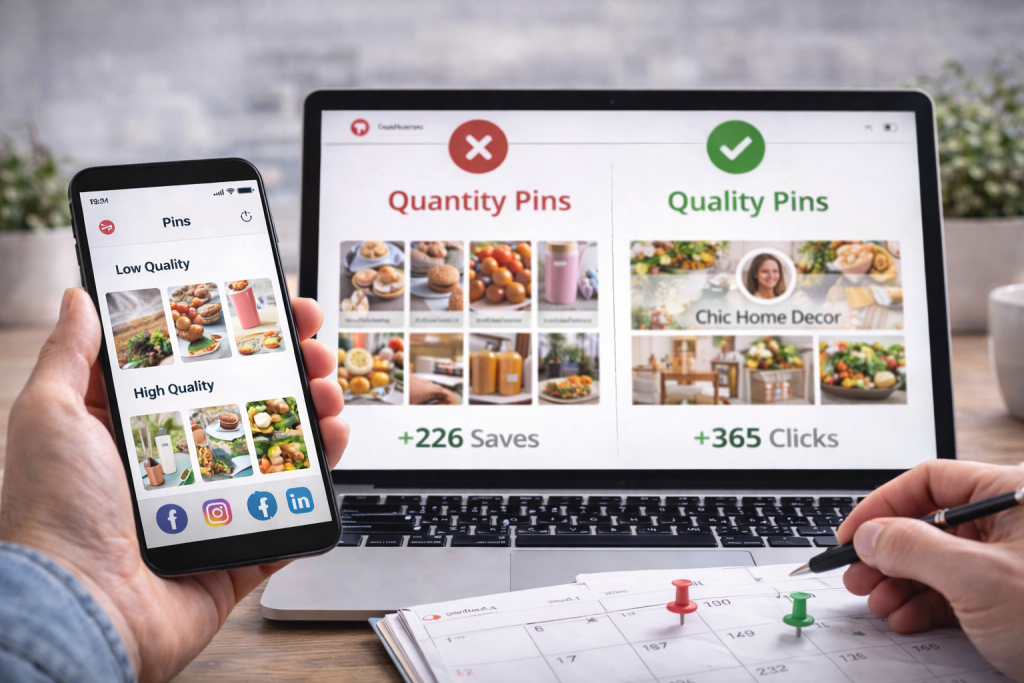
Think of Pinterest as a carefully curated art gallery, not a jumble sale. Unlike some platforms with strict posting schedules, Pinterest values quality over quantity.
There isn’t a fixed daily pin limit because Pinterest understands that great content comes in all shapes and sizes, depending on the creator and their audience.
Instead of focusing on arbitrary numbers, Pinterest’s algorithm looks at how your audience interacts with your pins, how relevant your pins are to their interests, and the overall happiness of users who see your content.
This approach rewards creators who understand the value of sharing truly engaging content.
Imagine two Pinterest accounts. One bombards users with dozens of generic pins every day. The other shares a smaller number of highly relevant, captivating pins.
The second account, focusing on quality, is far more likely to succeed. Pinterest users and marketers often discuss the sweet spot for daily pinning.
While there’s no official daily limit, a general recommendation is between 4 and 15 pins per day for the best balance of reach and engagement.
This range helps you stay visible without getting flagged as spam.
For a deeper dive into pinning frequency, check out this resource: How Many Times Should I Pin a Day?
This focus on user experience allows strategic pinners to thrive while naturally weeding out low-quality content.
Pinterest’s philosophy influences everything from how content is discovered to the long-term health and growth of your account.
This means understanding relevant keywords is key to connecting with your target audience.
Want to learn more? Check out our guide on Pinterest keyword research.
Ultimately, Pinterest encourages a sustainable pinning strategy built on authentic engagement, not aggressive posting. It’s about building a connection with your audience, not shouting at them.
Finding Your Optimal Daily Pinning Sweet Spot
Think of your Pinterest strategy like tending a garden. Too little attention and things won’t grow, too much and you’ll overwhelm it.
The trick is finding that perfect balance where your content thrives without setting off any spam alarms. This means understanding how the Pinterest daily pin limit actually works.
While Pinterest doesn’t have a strict number, finding your “sweet spot” is essential.
This infographic shows a phone with the Pinterest app, highlighting the idea of a daily pin limit.
As the infographic shows, there’s no magic number. Knowing your account’s specific needs, especially its age and how established it is, is key to finding the right pinning frequency.
For example, aiming for around 6 pins per day is a common tactic because it balances sharing a variety of content with the risk of overwhelming your followers.
This highlights the importance of quality over quantity, making sure each pin adds value without feeling spammy. Discover more insights on daily pinning strategies.
Nurturing New Accounts
Brand-new accounts are like seedlings – they need a gentler approach.
Starting with fewer pins helps build trust with the algorithm and creates a solid base for future growth.
Tending Established Accounts
Established accounts, however, have more leeway. They’ve earned the platform’s trust and can try pinning more frequently without raising red flags.
For more tips on timing, you might find this helpful: Best Time To Pin on Pinterest.
To help visualize this, let’s take a look at some recommendations:
Pinterest Pinning Frequency Recommendations by Account Type
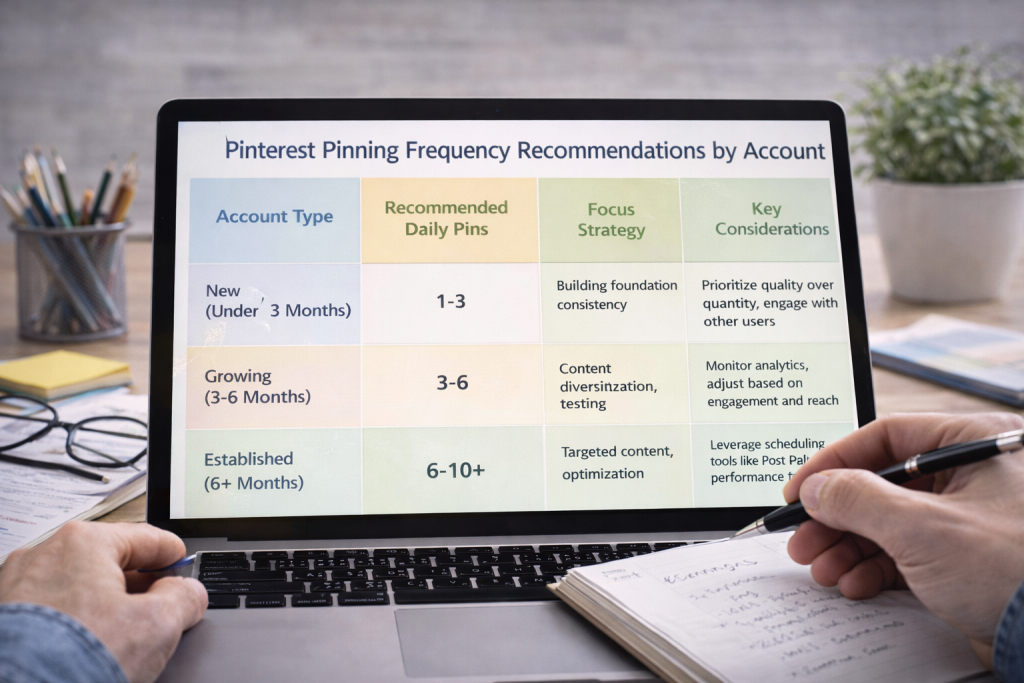
This table offers optimal daily pin counts based on your account’s age, size, and goals.
| Account Type | Recommended Daily Pins | Focus Strategy | Key Considerations |
|---|---|---|---|
| New (Under 3 Months) | 1-3 | Building foundation, consistency | Prioritize quality over quantity, engage with other users |
| Growing (3-6 Months) | 3-6 | Content diversification, testing | Monitor analytics, adjust based on engagement and reach |
| Established (6+ Months) | 6-10+ | Targeted content, optimization | Leverage scheduling tools like Post Paddle, analyze performance data for refinement |
As this table illustrates, finding what works best for you depends on several factors.
New accounts should focus on establishing a presence, while established accounts can experiment more.
Refining Your Approach
Finding your optimal Pinterest daily pin limit takes ongoing testing and tweaking. This means keeping an eye on key metrics like engagement, reach, and follower growth.
By carefully tracking your results at different posting frequencies, you can spot signs of over-pinning or find that sweet spot where your content really connects.
This helps you build a thriving Pinterest presence that delivers consistent, long-term results.
Building A Quality-First Sustainable Pinning Strategy
Think of your Pinterest presence as a curated art gallery, not a jumbled flea market. Each pin is a thoughtfully selected piece, strategically displayed to attract and engage your target audience.
Truly successful Pinterest accounts prioritize a strategic approach over simply churning out a high volume of pins.
They focus on building authentic relationships with their followers through consistently high-quality content.
This quality-first mindset is crucial when developing your Pinterest daily pin limit strategy.
Content Selection and Evaluation
Before you even think about how often to pin, concentrate on what you’re pinning. Top-performing Pinterest accounts have a knack for choosing content that truly resonates with their audience.
This means deeply understanding your audience’s interests and anticipating what they’ll find valuable. It’s like selecting artwork for your gallery – you want pieces that will captivate visitors and make a lasting impression.
Evaluating a pin’s potential before you hit that publish button is essential. Take the time to analyze similar content that’s already performing well on Pinterest.
What elements can you incorporate into your own pins? What’s working for others in your niche?
Timing Your Pins for Maximum Impact
Timing is everything on Pinterest. Just as an art gallery wouldn’t unveil a new exhibit at 3 AM, you need to strategically schedule your pins to align with your audience’s online behavior.
Knowing when your audience is most active on Pinterest is key to maximizing your content’s visibility and engagement.
Thankfully, scheduling tools like Post Paddle can help you optimize your pinning schedule.
These tools allow you to schedule pins at optimal times, ensuring your content reaches the right people at the right moment.
Developing a Diverse Content Mix
Keeping your audience engaged and coming back for more requires a diverse content mix. Think about it: an art gallery wouldn’t display only landscapes.
Similarly, your Pinterest boards should showcase a variety of themes and formats. This keeps your content fresh and interesting, preventing audience fatigue and establishing you as a go-to resource within your niche.
Think of your Pinterest boards as curating a diverse and captivating collection. You want to cater to different tastes and interests within your target audience.
This approach allows you to explore different facets of your niche while keeping your audience engaged and inspired.
To help you analyze your Pin performance and understand what needs tweaking, the table below offers some helpful guidance.
Pin Performance Metrics and Quality Indicators
Key metrics to track for evaluating pin quality and engagement success
| Metric | Good Performance | Needs Improvement | Action Required |
|---|---|---|---|
| Impressions | Consistently increasing | Stagnant or declining | Review pin design, keywords, and targeting. |
| Saves | High save rate compared to impressions | Low save rate | Improve pin quality, relevance, and call to action. |
| Clicks | Steady click-through rate | Low or declining click-through rate | Optimize pin description, link, and image. |
| Closeups | Increasing closeup rate | Low closeup rate | Enhance image quality and add compelling details. |
| Comments | Regular engagement and comments | Little to no comments | Ask questions, run contests, and respond to comments. |
As you can see from the table above, tracking these metrics helps you identify areas for improvement and refine your Pinning strategy for better results.
Regularly reviewing these metrics is crucial for ongoing success on Pinterest.
Mastering Strategic Repinning Without Crossing Boundaries
Imagine yourself as a museum curator on Pinterest. You’re not creating the art, but you’re carefully selecting and showcasing pieces that tell a story and reflect your unique taste.
That’s what repinning is all about. It’s a delicate balance: sharing great content from others while still maintaining your own distinct voice and promoting your original pins.
Finding that balance is key to a strategic approach that keeps you within community guidelines and avoids looking like a spam bot.
Think about some of the top Pinterest accounts in your industry. They’ve mastered the art of repinning to build authentic connections with their audience.
They’re seen as tastemakers, experts in their niche. They don’t just repin anything and everything. They carefully choose content that aligns with their brand and provides genuine value to their followers.
This careful curation builds trust and solidifies their presence on the platform.
So, how do you know if your repinning strategy needs a tune-up? A decline in engagement is a big red flag.
If your reach is shrinking and people aren’t interacting with your pins like they used to, it might be a sign you’re repinning too much or the content you’re choosing isn’t resonating.
While repinning is essential for a thriving Pinterest presence, experts recommend sticking to 15-25 repins per day to keep your feed fresh and focused.
Maintaining this balance between original content and strategic repins is critical for maximizing engagement and building a strong online presence. Discover more insights about Pinterest statistics here.
So, how can you repin strategically?
First and foremost, prioritize quality over quantity. Select content that truly resonates with you and offers real value to your audience. Make sure it aligns with your niche and overall brand aesthetic.
Second, don’t be a silent curator. When you repin, add your own perspective. Explain why you’re sharing it and how it connects to your own content or the theme of your board.
Finally, organize your boards thoughtfully. Think of them as individual exhibits in your online museum. Each board should have a clear focus and tell a cohesive story.
This thoughtful curation establishes you as a source of valuable information and inspiration within your community.
By mastering the art of strategic repinning, you can transform your Pinterest presence from a chaotic mix of random pins into a carefully curated collection that attracts and engages your ideal audience.
Leveraging Pinterest’s Unique Engagement Ecosystem
Unlike platforms where content quickly vanishes into the ether, Pinterest fosters long-term engagement. Think of it this way: Instagram is like a bustling marketplace, full of fleeting moments.
Pinterest, on the other hand, is a curated museum, where your “exhibits” (pins) remain on display for years to come.
This longevity is a cornerstone of your Pinterest daily pin limit strategy. You’re not just fishing for quick clicks; you’re building a lasting legacy of inspiration.
This unique ecosystem thrives on Pinterest’s search-driven discovery system. People don’t just wander onto Pinterest; they arrive with a purpose.
They’re actively searching for something specific, like the perfect sourdough recipe, a clever DIY hack, or that dream living room aesthetic.
This makes Pinterest incredibly powerful for connecting with a highly engaged audience. Imagine a pin you created months ago suddenly gaining traction because it aligns with a trending search term.
Your holiday cookie recipe, for instance, might be rediscovered and repinned every December.
On average, a pin gets about 11 repins, amplifying its reach organically, especially among users with similar interests. Discover more insights about Pinterest statistics here.
Pinterest users also have a unique “saving mindset.” They’re not just passively scrolling; they’re actively curating and saving ideas for later.
This gives your content a much longer shelf life and influence, unlike platforms where content is consumed and forgotten in the blink of an eye.
Think of it like adding items to a wish list – those pins remain saved, ready to be revisited when the time is right.
This “saving” behavior lets you cultivate a loyal following who see you as a go-to source for inspiration within your niche.
By understanding this unique dynamic, you can develop a Pinterest daily pin limit strategy focused on creating high-quality, evergreen content.
Content that continues to resonate with users long after it’s first posted. This long-term approach, combined with a deep understanding of Pinterest’s search functionality, is the key to thriving on the platform.
It’s how you establish yourself as an authority and drive consistent traffic and engagement over time.
Advanced Scheduling Tools For Consistent Pinterest Success
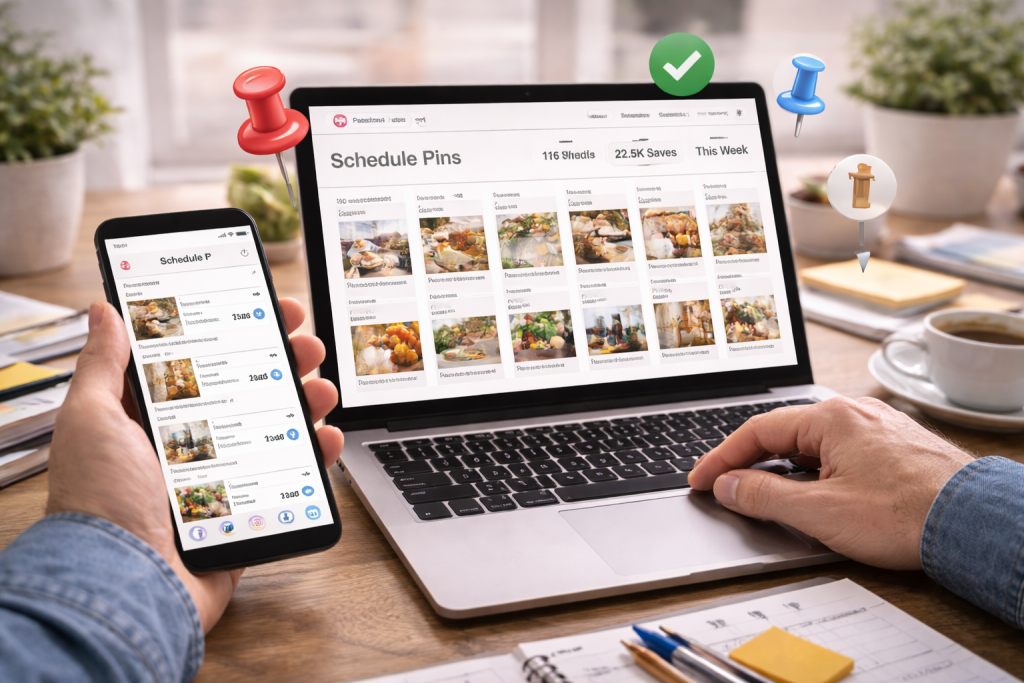
Managing your Pinterest presence can sometimes feel like trying to keep plates spinning. You want to post regularly, but you also don’t want to lose the authentic voice that connects with your audience.
That’s where scheduling tools come in. They help you maintain a consistent posting rhythm while keeping within your Pinterest daily pin limit best practices.
Think of them as a way to automate without sacrificing genuine connection.
These tools allow you to batch-create and schedule pins across multiple boards, targeting specific themes and audience segments.
It’s all about ensuring a steady stream of fresh content without the constant manual effort.
This becomes especially important as your audience grows—you can scale your Pinterest strategy without feeling buried under a mountain of pins.
Streamlining Your Pinterest Workflow
Imagine having a personal assistant dedicated to your Pinterest.
Scheduling tools essentially take over the repetitive task of manual pinning, freeing you up to focus on what truly matters: creating captivating content and engaging with your followers.
Post Paddle offers a range of features designed to streamline your Pinterest marketing.
The screenshot above shows Post Paddle’s intuitive interface. Features like bulk pin creation, automated scheduling, and performance tracking are all designed to simplify your workflow.
This allows you to hit your Pinterest daily pin limit strategically, distributing pins throughout the day and week, rather than dumping them all at once.
Balancing Automation with Authenticity
While automation is a huge time-saver, remember that authenticity is key on Pinterest. Scheduling tools help you plan your content in advance, but they shouldn’t replace real-time engagement.
Respond to comments, keep an eye on trending topics, and participate in community discussions—this personal touch keeps your scheduled content feeling real and relevant.
Scheduling tools can also help you analyze pin performance. Understanding what resonates with your audience allows you to refine your strategy, ensuring that every pin counts.
Want to dive deeper into scheduling? Learning more about scheduling pins on Pinterest is a good place to start.
By using these tools strategically, you can transform your Pinterest presence from a time-consuming task into a well-oiled, engagement-driving machine.
Your Complete Pinterest Success Action Plan

Pinterest success isn’t about sticking to a rigid Pinterest daily pin limit. It’s more about understanding the platform’s vibe and building sustainable practices.
This action plan will help you take practical steps, no matter your Pinterest experience level.
Building Your Pinterest Presence
Think of building your Pinterest presence like building a house. You wouldn’t start with the roof, would you?
A strong Pinterest foundation needs a strategic approach. For new accounts, focus on creating high-quality boards relevant to your niche. This is like laying the groundwork – it’s absolutely essential for future growth.
We’ll give you realistic timelines. For example, your first month should be all about board creation and initial pinning.
As your account matures, you can increase your pinning frequency and try out different types of content.
Measuring Success and Overcoming Challenges
So, how do you know if your Pinterest house is built to last? By tracking key metrics! We’ll set clear benchmarks for success at different stages.
A new account might prioritize follower growth, while an established account might focus on website clicks and conversions.
Like any building project, there will be bumps in the road. We’ll give you detailed troubleshooting guides for common Pinterest challenges, from declining engagement to navigating algorithm changes.
Think of it as your toolbox filled with solutions for any problem that might pop up.
Adapting, Maintaining, and Scaling Your Strategy
Pinterest isn’t one-size-fits-all. You need to tailor your approach to your niche and business goals.
We’ll show you how to adapt our proven strategies to what you want to achieve. It’s like customizing a blueprint to build your dream house.
Consistency is key to a thriving Pinterest presence. We’ll help you create accountability systems to maintain your progress. Think of this like regular inspections during construction – making sure everything stays on track.
As your Pinterest “house” grows, you’ll need to scale your efforts. We’ll provide scalable approaches that adapt as your account expands.
This is like adding new rooms and features – allowing your Pinterest presence to evolve with you.
We’ll give you checklists, warn you of early warning signs to watch out for, and celebrate milestones to keep you motivated.
You’ll learn how to capitalize on moments when your content takes off, and how to navigate slower periods. Just like managing the ebb and flow of any successful project.
Make your daily pinning strategy simple and sustainable
If you want a clear plan for how many Pins to publish each day, without triggering spam signals, start with a quality-first checklist.
A “smart” daily pin limit isn’t a fixed number. It’s a routine that fits your account stage, keeps your boards active, and makes every Pin worth posting. The easiest way to do that is to check your Pins before they go live, so you’re not pinning more, you’re pinning better.
That’s why I recommend using our free Pin Optimization Checklist.
It helps you quickly confirm the essentials that actually impact reach: strong keywords, clear titles, scroll-stopping visuals, the right boards, and a clean CTA link, so your daily pinning stays consistent and your analytics stay healthy.
Use it to batch your content, space Pins out across the day, and keep quality high, whether you’re posting 3 Pins a day or 15.
Ready to pin with confidence instead of guessing?
Frequently Asked Questions
1. Does Pinterest have an official daily Pin limit?
Pinterest doesn’t publish one “magic number” that applies to every account. What matters most is consistent, relevant posting and avoiding behavior that looks spammy.
2. How many Pins per day should a new account start with?
Start light and build momentum. A small daily cadence (a few Pins per day) helps you stay consistent while you learn what your audience actually engages with.
3. What are signs I’m pinning too much?
Watch for sudden drops in impressions, lower engagement, or Pins getting less distribution than usual. If that happens, reduce volume, increase spacing, and focus on stronger Pin quality.
4. Is repinning counted the same as publishing new Pins?
Repins still affect how active your account looks, but they work best when they’re intentional and curated. Mix repins with your original content so your boards stay useful (not noisy).
5. Do scheduling tools help you avoid overposting?
Yes—good schedulers help you space Pins naturally across the day and week, which supports consistency and helps you avoid dumping a bunch of Pins at once.