
Welcome to the definitive guide for crafting compelling Pinterest board titles that attract followers, drive traffic, and get your content discovered.
On a platform with over 200 billion pins, a strategically named board is your most critical advantage.
It’s the difference between a collection that fades into obscurity and one that becomes a go-to resource for your target audience, directly impacting your visibility and reach.
We’re moving beyond generic names like ‘Cool Stuff’ and diving deep into the art and science of titles that work with Pinterest’s search algorithm, not against it.
A powerful title clearly communicates your board’s value, incorporates relevant keywords, and entices users to click, follow, and engage.
Think of it as the headline for a mini-magazine you’ve curated; it needs to be both descriptive and appealing to draw in the right readers.
This comprehensive listicle breaks down everything you need to know, from foundational best practices to advanced copywriting psychology. You will find hundreds of specific, actionable ideas organized by niche and creator type, plus common mistakes to avoid.
Whether you’re a seasoned blogger, an e-commerce entrepreneur, or a social media manager, mastering these concepts will transform your Pinterest presence from a passive hobby into a powerful marketing engine.
Why Pinterest Board Titles Matter for Clicks and Reach
Before someone ever sees your pins, they see your Pinterest board titles. Those few words tell both users and the algorithm who your content is for and why it’s worth a click.
When your titles blend clear keywords with compelling language, your boards start ranking in search, earning more saves, and quietly driving traffic on autopilot, long after you hit publish.
In the sections below, you’ll see 8 proven types of Pinterest board title from foundational SEO titles to aesthetic, trend-driven names, that you can mix and match to make your boards more discoverable, clickable, and follow-worthy.
1. Foundational SEO: The Strategic Board Title
This is the bedrock of any successful Pinterest strategy. A foundational SEO board title is built around clear, searchable keywords that your target audience is actively typing into the search bar.
Instead of being clever or cute, the primary goal is discoverability. This approach treats your board title as a direct answer to a user’s query, aligning perfectly with Pinterest’s function as a visual search engine.
Think about the core problems you solve or the main topics you cover, and build your titles around those terms.
Getting this right means your board will consistently appear in search results, attracting a steady stream of relevant followers and traffic.
These are the workhorse boards that drive long-term, organic growth for your account.
Why This Approach Works
This method leverages Pinterest’s search algorithm directly. By using specific, high-intent keywords, you ensure your boards are shown to users who are actively looking for the solutions and inspiration you provide.
It’s a direct line to your ideal audience, resulting in higher engagement, more saves, and increased outbound clicks.
This foundational work also has a compounding effect; as your board gains traction, Pinterest is more likely to recommend it to other users. As search technology evolves, understanding how to align your content with user queries is more critical than ever.
For a comprehensive understanding of how to adapt your content strategy to AI-powered discovery, delve into this practical guide to AI search optimization.
Actionable Tips for Implementation
- Front-Load Keywords: Place your most important keyword within the first 3-4 words of the title for maximum impact.
- Be Specific: Avoid vague titles like “Good Ideas.” Instead, use “Small Kitchen Organization Ideas” or “Vegan Meal Prep for Beginners.”
- Use Numbers and Brackets: Titles like “[2024] Home Office Design Trends” or “5 Easy Sourdough Recipes” often have higher click-through rates.
- Test and Track: Create several boards with slight variations in your pinterest board titles and monitor their performance in your Pinterest Analytics to see which keywords resonate most.
This strategic titling is just one piece of the puzzle; organizing your boards effectively is the next step to maximizing your account’s potential.
To dive deeper, you can learn how to organize your Pinterest boards for better reach.
2. Creative Pinterest Board Title Ideas by Niche
Moving beyond broad keywords, this approach involves tailoring your pinterest board titles to the specific language and trends of your niche.
Instead of just “Recipe Ideas,” you create hyper-focused boards like “Gluten-Free Fall Desserts” or “30-Minute Vegan Dinners.”
This strategy helps you attract a highly engaged, pre-qualified audience that is looking for exactly what you offer, turning casual browsers into dedicated followers.

This method is about demonstrating expertise and authority within a specific community.
By creating a collection of niche-specific boards, you signal to both users and the Pinterest algorithm that you are a go-to resource for a particular topic.
This builds trust and makes your profile a destination for inspiration, not just a random stop in a user’s search journey.
Why This Approach Works
Niche-specific titles cut through the noise on a crowded platform. They connect with users on a deeper level by speaking their language and addressing their specific pain points or interests.
This targeted approach results in higher-quality follower growth and more meaningful engagement because the audience you attract is genuinely interested in your core content.
It also allows you to rank for long-tail keywords that have less competition but higher conversion intent.
Actionable Tips for Implementation
- Drill Down on Topics: Break down broad categories into micro-niches. Instead of “Fashion,” create boards for “Minimalist Capsule Wardrobe,” “Sustainable Fashion Brands,” or “Boho Summer Festival Outfits.”
- Use Niche-Specific Lingo: Incorporate terms that are popular within your community. For example, a home decor blogger might use “Modern Farmhouse Living Room” or “Dark Academia Office Inspo.”
- Analyze Competitor Boards: See what successful accounts in your niche are naming their boards. Identify patterns and find opportunities to create even more specific or unique titles.
- Refresh Seasonally: Update your niche boards with seasonal or trending keywords. A “Winter Wellness Tips” board can be refreshed to “Spring Self-Care Routines” to maintain relevance.
Crafting the perfect niche title can sometimes be challenging, but using a specialized tool can spark new ideas. For an endless supply of inspiration, check out this free Pinterest board name generator.
3. Pinterest Hashtag Strategy for Board Titles
While traditional SEO keywords are the foundation, integrating strategic hashtags directly into your board titles offers a dynamic layer for discovery.
This approach leverages trending topics and user-generated tagging behavior, making your boards more visible in niche searches and “explore” feeds.
It’s about meeting users where they are, using the very language and tags they use to categorize content.
Unlike other platforms where hashtags are primarily for real-time feeds, on Pinterest they function as searchable keywords with a community-driven feel.

Adding a relevant hashtag to your title can signal to the algorithm that your board is highly relevant to a specific, trending conversation or aesthetic, such as #cottagecore or #darkacademia.
This method is particularly effective for topics that are seasonal, trend-based, or have a strong community identity.
Why This Approach Works
This strategy taps into Pinterest’s multifaceted search system, which considers keywords, hashtags, and user engagement.
By including a hashtag, you are essentially adding another powerful keyword that helps the algorithm categorize and recommend your content.
It allows you to appear in hashtag-specific search results, which can be less competitive than broad keyword searches.
This is a savvy way to enhance your pinterest board titles for both immediate trend-based visibility and long-term searchability.
Actionable Tips for Implementation
- Place Keywords First: Always start with your primary SEO keyword phrase, then add the hashtag. For example: “Minimalist Home Decor #minimalisthome.”
- Use 2-3 Relevant Hashtags: Don’t overdo it. Select a few highly specific hashtags that accurately describe the board’s content. A title like “Vegan Recipes #plantbased #healthy” is more effective than a long string of tags.
- Research Trending Keywords: Use the Pinterest search bar to see what hashtags are auto-suggested for your niche. This is a direct indicator of what users are actively searching for.
- Monitor Seasonality: Hashtags like #fallfashion or #christmascookies see huge seasonal spikes. Create or update board titles to capitalize on these timely trends.
Understanding the nuances of hashtag use is crucial for this strategy to be effective. For a deeper dive into how hashtags function across the platform, you can explore the definitive guide on whether you should use hashtags on Pinterest.
4. Aesthetic & Viral Pinterest Board Title Trends
This approach taps into the visual and emotional core of Pinterest by using titles that are as beautiful and inspiring as the content they contain.
Aesthetic and viral titles leverage current cultural trends, aspirational language, and psychologically compelling formats to stop users mid-scroll.
The goal here is to create a title that not only describes the content but also evokes a specific feeling, lifestyle, or vibe that resonates deeply with a target niche.

Popularized by lifestyle influencers and design-forward brands, these pinterest board titles often blend trendy buzzwords like “soft girl,” “quiet luxury,” or “cottagecore” with foundational keywords.
This creates a powerful hybrid that is both highly searchable and instantly captivating, making users feel they’ve discovered a curated, exclusive collection of ideas.
Why This Approach Works
This method works by connecting with users on an emotional level. An aesthetic title promises more than just information; it promises an experience or a transformation.
When a user sees a board titled “Quiet Luxury Aesthetic: Minimalist Living Board,” they are drawn to the aspirational lifestyle it represents.
This emotional connection leads to higher engagement, more passionate followers, and a greater number of saves, as users want to “own” a piece of that aesthetic for themselves.
These titles signal that your brand is current, stylish, and understands the nuances of modern trends.
Actionable Tips for Implementation
- Combine Trends with Keywords: Pair a viral term with a clear, searchable keyword. For example, use “Soft Girl Fashion: Cottagecore Outfit Inspiration” instead of just “Soft Girl Aesthetic.”
- Use Aspirational Language: Frame your titles to reflect a desired feeling or outcome. Titles like “Aesthetic Home Sanctuary Inspo & Design Ideas” are more compelling than “Home Decor.”
- Incorporate Power Words: Weave in words like ‘Ultimate,’ ‘Essential,’ ‘Dreamy,’ or ‘Complete’ to add a sense of authority and value to your board.
- Balance with Evergreen Boards: While trendy boards are excellent for engagement, ensure you also have foundational SEO boards to capture timeless search traffic and maintain long-term relevance.
5. Pinterest Board Title Length & Format Optimization
Beyond just the keywords you choose, the technical structure of your board title plays a critical role in its performance.
This approach focuses on the data-driven aspects of titling, such as optimal character length, formatting, and spacing, to maximize visibility and user engagement.
It’s about engineering your title to be as algorithmically friendly and human-readable as possible, especially on mobile devices where space is limited.
Treating your title’s format as a strategic element can significantly impact click-through rates and search ranking.
A well-formatted title is easier to scan, appears more professional, and is less likely to be truncated awkwardly on different screens.
This technical optimization ensures your carefully chosen keywords have the best possible chance to be seen and acted upon by your target audience.
Why This Approach Works
This method works by removing friction for both the Pinterest algorithm and the user. The algorithm can more easily parse and index a clean, well-structured title.
For users, a title that is easy to read and understand at a glance, especially on a small mobile screen, is more appealing and trustworthy.
Proper formatting with separators like colons or pipes can also help your board stand out in a crowded search results page, directly impacting its performance.
Actionable Tips for Implementation
- Front-Load Keywords: Assume your title will be cut off. Place your most vital keywords within the first 15-20 characters to guarantee visibility on all devices.
- Use Visual Separators: Employ pipes (|), colons (:), or dashes (-) to break up longer pinterest board titles and improve readability. For example, “Home Decor Ideas | Modern Farmhouse Style.”
- Prioritize Mobile View: Before finalizing a title, check how it appears on a mobile device. Long titles that get truncated can lose their meaning and impact.
- Test and Measure: Create A/B tests for title formats. Run two similar boards with different title structures (e.g., “Keto Dinner Recipes” vs. “Keto Recipes: Easy Dinners”) and use Pinterest Analytics to track which format generates more impressions and engagement.
6. Pinterest Board Titles for Different Creator Levels
Not every Pinterest creator is at the same stage of their journey, and their board title strategy shouldn’t be one-size-fits-all.
This approach involves tailoring your pinterest board titles to match your experience level, ensuring your strategy evolves as your account grows.
It provides a clear progression path, from foundational discoverability to sophisticated brand positioning, allowing you to optimize your efforts effectively at each stage.

This method acknowledges that a beginner’s primary goal is search visibility, while an advanced creator may focus on establishing authority and niche dominance.
By aligning your board naming conventions with your current goals and audience understanding, you can maximize your growth potential without getting overwhelmed by complex strategies too early on.
This creates a sustainable and scalable approach to managing your Pinterest presence.
Why This Approach Works
This tiered strategy works because it meets you where you are. Beginners can focus on mastering the basics of SEO without pressure, building a solid foundation. Intermediate users can begin experimenting with more nuanced keyword strategies and audience targeting.
Advanced creators can leverage their established presence with highly specific, brand-aligned titles that cement their expertise. This progression prevents stagnation and ensures your Pinterest strategy matures alongside your brand.
Actionable Tips for Implementation
- Beginner Level (Focus: Discoverability): Start with clear, broad, descriptive titles. Use straightforward keywords that directly state the board’s content. For example, “Easy Dinner Recipes,” “Living Room Decor Ideas,” or “Beginner Workout Plans.”
- Intermediate Level (Focus: Optimization): Begin incorporating long-tail keywords and qualifiers. Refine your titles to attract a more specific audience. Evolve “Easy Dinner Recipes” to “30-Minute Weeknight Dinner Recipes” or “Healthy Vegan Dinner Ideas for Families.”
- Advanced Level (Focus: Authority): Use titles that establish your unique brand voice and authority. Blend strong keywords with your brand name or a unique series title. For example, “[Your Brand Name] | The Ultimate Guide to Sourdough” or “Color Theory for Interior Design | Expert Tips.”
7. Pinterest Board Title Copywriting & Psychology
This advanced approach moves beyond basic keywords and into the realm of persuasion. It involves applying copywriting principles and psychological triggers directly to your pinterest board titles to evoke emotion, spark curiosity, and drive action.
The goal is not just to be discovered but to be so compelling that a user feels an immediate urge to click, explore, and follow.

This method transforms a simple title into a powerful value proposition. It answers the user’s unspoken question, “What’s in it for me?” by highlighting benefits, promising transformations, or creating an intriguing information gap.
Boards with titles like “Transform Your Home: Interior Design Ideas That Inspire” or “Lazy Girl Jobs: Work-From-Home Ideas (2024 Edition)” connect on a deeper, more emotional level than a purely keyword-driven title.
Why This Approach Works
This strategy taps into the fundamental human drivers of decision-making: emotion, desire, and curiosity.
By using persuasive language, you create a stronger connection with your audience, making your board feel less like a content repository and more like a curated solution to their specific needs or aspirations.
This psychological layer significantly increases engagement rates, as users are more likely to interact with content that resonates with them emotionally.
For a deeper dive into how algorithms utilize keywords and to develop a robust understanding of discoverability, explore these strategies for using hashtags effectively, as many principles overlap.
Actionable Tips for Implementation
- Use Power Words: Sprinkle in words like “Ultimate,” “Essential,” “Complete,” or “Proven” to add authority and perceived value to your board.
- Focus on Benefits, Not Features: Instead of “Kitchen Gadgets,” try “Kitchen Gadgets That Save You Time.” Highlight the outcome for the user.
- Create Curiosity Gaps: A title like “Design Mistakes Almost Everyone Makes” encourages exploration by making users want to know if they are guilty of those mistakes.
- Test Emotional Angles: Create two similar boards and use A/B testing on the titles. One could be benefit-driven (“Declutter Your Life”) and the other fear-driven (“Clutter Mistakes Stressing You Out”) to see what resonates.
8. Pinterest Board Title Mistakes to Avoid
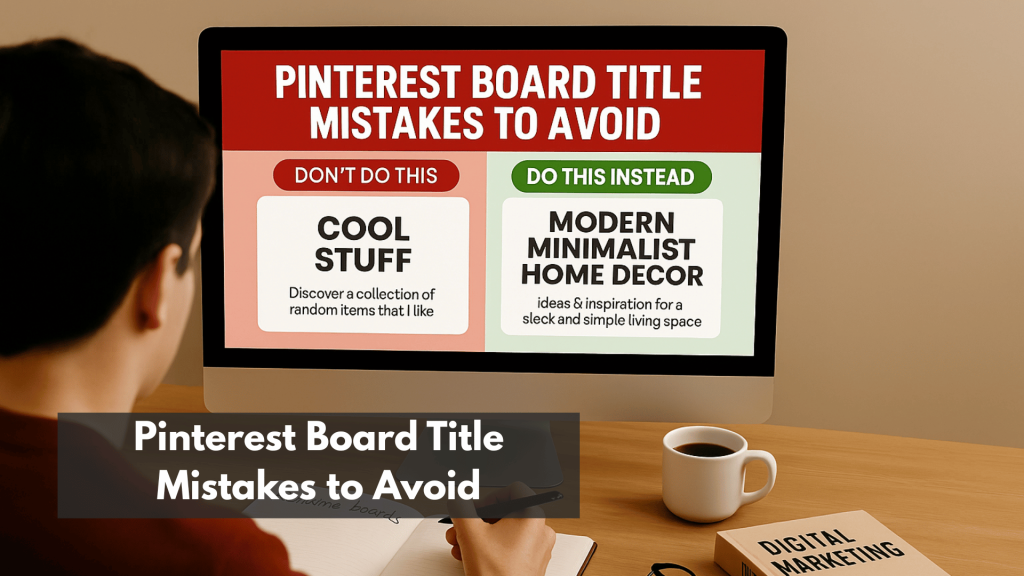
Sometimes, the best way to learn what to do is by understanding what not to do. This approach involves creating an educational board that highlights common naming errors, pitfalls, and missed opportunities in Pinterest board titles.
It serves as a practical guide, using before-and-after examples to demonstrate how poor titles can be improved and why certain mistakes hurt a board’s performance and reach.
This meta-approach positions you as an expert in Pinterest strategy. Instead of just showcasing good examples, you are actively teaching your audience how to self-diagnose and correct their own errors.
This builds trust and authority, encouraging followers to look to you for reliable marketing advice. The board becomes a go-to resource for anyone looking to optimize their account.
Why This Approach Works
This educational method resonates because it addresses common pain points directly. Many users know their boards aren’t performing well but can’t pinpoint why.
By creating a board that explicitly says “Don’t Do This,” you capture the attention of users who are actively seeking solutions.
Presenting clear before-and-after scenarios (e.g., changing “Cool Stuff” to “Modern Minimalist Home Decor”) provides an immediate “aha” moment, making the value proposition instantly clear and actionable.
Actionable Tips for Implementation
- Create “Before & After” Pins: Design pins that visually show a weak board title next to a strong, optimized alternative. Use text overlays to explain why the new title is better.
- Audit Your Own Boards: Use your account as a case study. Share a pin about how you audited and renamed your own pinterest board titles and the positive results you achieved.
- Focus on Specific Mistakes: Dedicate pins to individual errors, such as using vague single-word titles, keyword stuffing, or using symbols that hinder searchability.
- Rename Boards Gradually: If you decide to update your own boards based on this strategy, rename them over a period of weeks to avoid confusing your existing followers and to properly track performance changes for each one.
8-Point Pinterest Board Title Comparison
| Board Title | Implementation complexity 🔄 | Resource requirements ⚡ | Expected outcomes 📊⭐ | Ideal use cases 💡 | Key advantages ⭐ |
|---|---|---|---|---|---|
| Pinterest Board Title Best Practices & Strategy | 🔄 Medium — SEO + periodic updates | ⚡ Low–Medium — keyword tools, time for testing | 📊 Improved visibility; ⭐⭐⭐⭐ — evergreen gains | 💡 Training creators, baseline SEO improvements | ⭐ Searchable, broadly applicable |
| Creative Pinterest Board Title Ideas by Niche | 🔄 Low — curated templates, minimal process | ⚡ Medium — curation + periodic refresh | 📊 High immediate usability; ⭐⭐⭐⭐ | 💡 Inspiration for niche creators, rapid board setup | ⭐ Practical, wide niche coverage |
| Pinterest Hashtag Strategy for Board Titles | 🔄 Medium–High — requires algorithm knowledge | ⚡ Medium — analytics & keyword tools | 📊 Better discoverability; ⭐⭐⭐⭐ | 💡 Targeted search optimization & campaigns | ⭐ Measurable search impact |
| Aesthetic & Viral Pinterest Board Title Trends | 🔄 Medium — trend monitoring + creative work | ⚡ Medium–High — design assets & frequent updates | 📊 High engagement potential; ⭐⭐⭐ | 💡 Influencers, viral content, lifestyle brands | ⭐ Highly shareable and inspiring |
| Pinterest Board Title Length & Format Optimization | 🔄 Medium — technical testing and analysis | ⚡ Medium — A/B tests, device checks, analytics | 📊 Measurable CTR/UX gains; ⭐⭐⭐⭐ | 💡 Mobile-first optimization, data-driven accounts | ⭐ Data-backed performance improvements |
| Pinterest Board Titles for Different Creator Levels | 🔄 Low–Medium — create tiered content sets | ⚡ Medium — multiple templates and guides | 📊 Improved onboarding & progression; ⭐⭐⭐ | 💡 Educational platforms, agencies, diverse audiences | ⭐ Scalable and user-friendly |
| Pinterest Board Title Copywriting & Psychology | 🔄 High — advanced copy techniques + testing | ⚡ Medium–High — skilled writers, testing tools | 📊 Strong CTR & engagement uplift; ⭐⭐⭐⭐ | 💡 Conversion-focused boards and campaigns | ⭐ Persuasive, differentiation-focused |
| Pinterest Board Title Mistakes to Avoid | 🔄 Low — audit-focused, diagnostic workflow | ⚡ Low — examples and simple audits | 📊 Prevents losses; modest gains; ⭐⭐⭐ | 💡 Audits, onboarding, quick fixes for underperforming boards | ⭐ Practical, memorable lessons |
Automate Your Success: The Final Step in Pinterest Mastery
You’ve navigated the intricate world of Pinterest board titles, moving from foundational best practices to the nuanced psychology of copywriting.
We’ve explored everything from niche-specific ideas and hashtag strategies to the latest aesthetic trends and critical mistakes to sidestep.
This comprehensive journey has equipped you with a powerful toolkit designed to transform your Pinterest profile from a simple collection of images into a strategic, traffic-driving machine.
The core lesson is clear: an effective board title is a masterclass in balance, blending keyword-driven SEO with creative, user-centric language.
The difference between a stagnant profile and a thriving one often comes down to the deliberate application of these principles.
Your pinterest board titles are the signposts that guide users and the Pinterest algorithm to your content.
They are your first, and often most important, opportunity to communicate value, establish authority, and capture the interest of your ideal audience.
Synthesizing Your Strategy for Maximum Impact
Let’s distill the most critical takeaways from our exploration. Mastering your Pinterest presence isn’t about finding one “magic bullet” title format; it’s about building a cohesive, multi-faceted strategy.
Your Actionable Blueprint Moving Forward:
- Audit and Optimize: Begin by reviewing your existing boards. Are the titles too generic? Are they missing crucial keywords? Apply the optimization techniques from the article, focusing on length, format, and keyword integration to give them an immediate boost.
- Embrace the Hybrid Model: The most successful pinterest board titles merge searchability with creativity. Don’t sacrifice a compelling, aesthetic title for a keyword-stuffed one, or vice versa. Aim for a title like “Modern Farmhouse Kitchen | Design & Decor Inspo” which serves both human readers and search algorithms.
- Test and Analyze: Your Pinterest Analytics are your most valuable feedback loop. Create two boards with similar content but different title strategies (e.g., one keyword-focused, one trend-focused) and monitor which one gains more traction, impressions, and followers over a 30-day period. This data is gold for refining your future approach.
- Think Beyond the Title: A brilliant title is only as good as the content it represents. The ultimate goal is to create a seamless user experience. The promise made in your board title must be fulfilled by the quality, relevance, and value of the pins within it. Consistency across your titles, board descriptions, and pin content is what builds trust and encourages follows.
By consistently applying these layered strategies, you elevate your Pinterest game from casual pinning to intentional, goal-oriented marketing.
This methodical approach ensures that every element of your profile works in concert to attract, engage, and convert your target audience, solidifying your brand’s authority in its niche.
Make Every Pinterest Board Title Work Harder for Traffic and Growth
When your boards are finally dialed in, the last thing you want is to stall out staring at a blank “Board name” field.
The right title can be the difference between a board that quietly sits there and one that pulls in search traffic and new followers every day.
Instead of guessing, let data-backed, keyword-friendly ideas come to you. Drop in your niche or topic and instantly generate board titles that are clear, clickable, and built for Pinterest SEO.
Frequently Ask Question
1. How important are Pinterest board titles for SEO?
Very important. Pinterest board titles act like keywords for your entire collection of pins, helping the algorithm understand your niche and show your boards in relevant searches. Clear, keyword-rich titles can significantly boost impressions and clicks over time.
2. How long should a Pinterest board title be?
Aim for concise titles of 30–40 characters so they don’t get cut off on mobile. Put your main keyword at the beginning (e.g., “Keto Dinner Recipes | Easy Meals”) so the most important part is always visible.
3. Can I rename my Pinterest boards without hurting performance?
Yes. You can safely rename boards, and it often improves performance if you add clearer, search-focused keywords. Just avoid changing names too frequently and make sure your board description and pins still match the new title.
4. What are some examples of good Pinterest board titles?
Good titles are specific and keyword-driven, like “Minimalist Bedroom Ideas,” “Healthy Meal Prep Recipes,” or “Small Business Marketing Tips.” They clearly tell users what they’ll get and match phrases people actually search for.
5. Should I use hashtags in my Pinterest board titles?
You can, but sparingly. Prioritize a strong keyword phrase first, then add 1–2 relevant hashtags at the end if it fits your niche (e.g., “Cozy Reading Nook Ideas #homedecor”). Don’t overstuff titles with hashtags, or they’ll become harder to read.