
Driving organic traffic to your website isn’t about finding a magic bullet.
It really boils down to getting three things right: creating genuinely helpful content, making sure search engines can easily understand your site, and building a solid reputation online.
When you nail these, you create a powerful system that brings in visitors consistently, long after you’ve hit “publish.”
This is a long-game strategy. It’s about building a valuable asset, not just chasing quick, paid traffic spikes that vanish the second you turn off your ad spend.
Building Your Foundation for Organic Growth
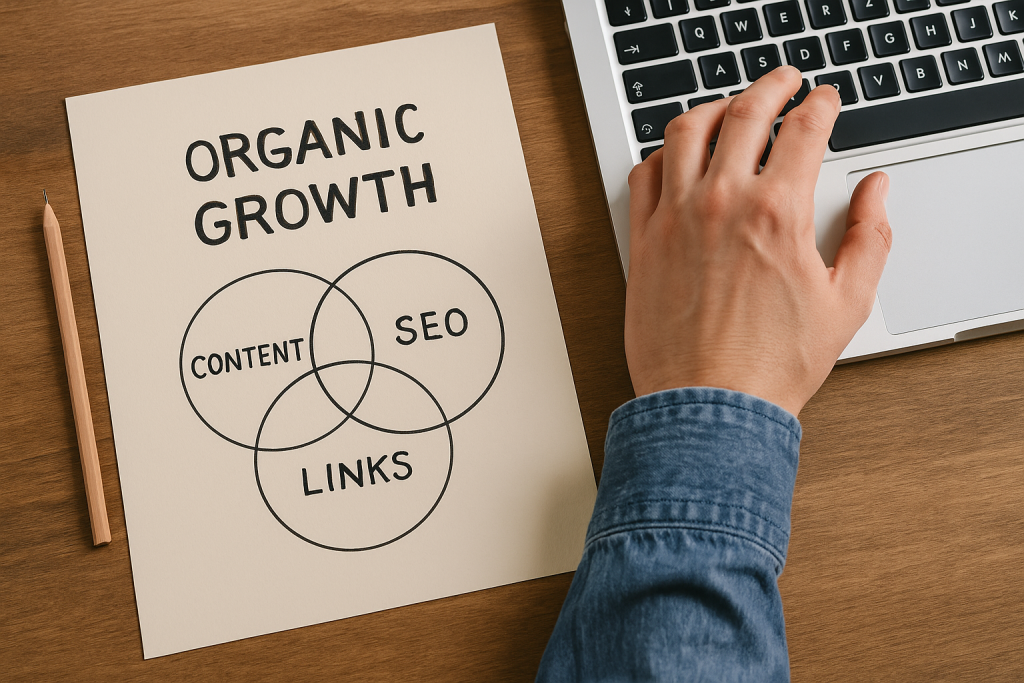
Before we jump into the nitty-gritty tactics, let’s get our mindset straight. Growing organic traffic is a marathon, not a sprint.
The work you put in today—crafting that perfect blog post or fixing a technical glitch—can pay dividends for years.
Think of it this way: you’re building a traffic source you own, rather than one you just rent. That’s a powerful shift.
Why Organic Clicks Are So Powerful
The data doesn’t lie. People overwhelmingly click on organic search results.
A massive 94% of all clicks on Google go to organic listings, with paid ads fighting over the remaining 6%.
This isn’t just a number; it tells you about user trust.
When someone finds you naturally through a search, there’s an immediate sense of credibility that paid placements just can’t replicate.
Understanding the Three Core Pillars
To truly grow your organic traffic, you need to focus on three interconnected areas. If one is weak, the others will eventually falter.
It’s like a three-legged stool—remove one leg, and the whole thing comes crashing down.
To make this clearer, let’s break down the foundational elements required for sustainable growth.
Core Pillars of Organic Traffic Growth
| Pillar | Primary Goal | Key Activities |
|---|---|---|
| Technical Health | Make it easy for search engines to find, crawl, and index your website. | Optimizing site speed, ensuring mobile-friendliness, creating a clean site structure, fixing broken links. |
| High-Value Content | Attract and engage your target audience by solving their problems. | In-depth articles, how-to guides, and resources that answer specific user questions and match search intent. |
| Off-Page Authority | Build your site’s reputation and credibility across the internet. | Earning high-quality backlinks from relevant, trustworthy websites to signal your authority to search engines. |
Each pillar supports the others. Great content won’t get found on a technically broken site, and a perfect site with no content is an empty shell.
Authority ties it all together, telling Google that your content and site are worth ranking.
The image below shows how these core activities work together to drive real, sustainable traffic.
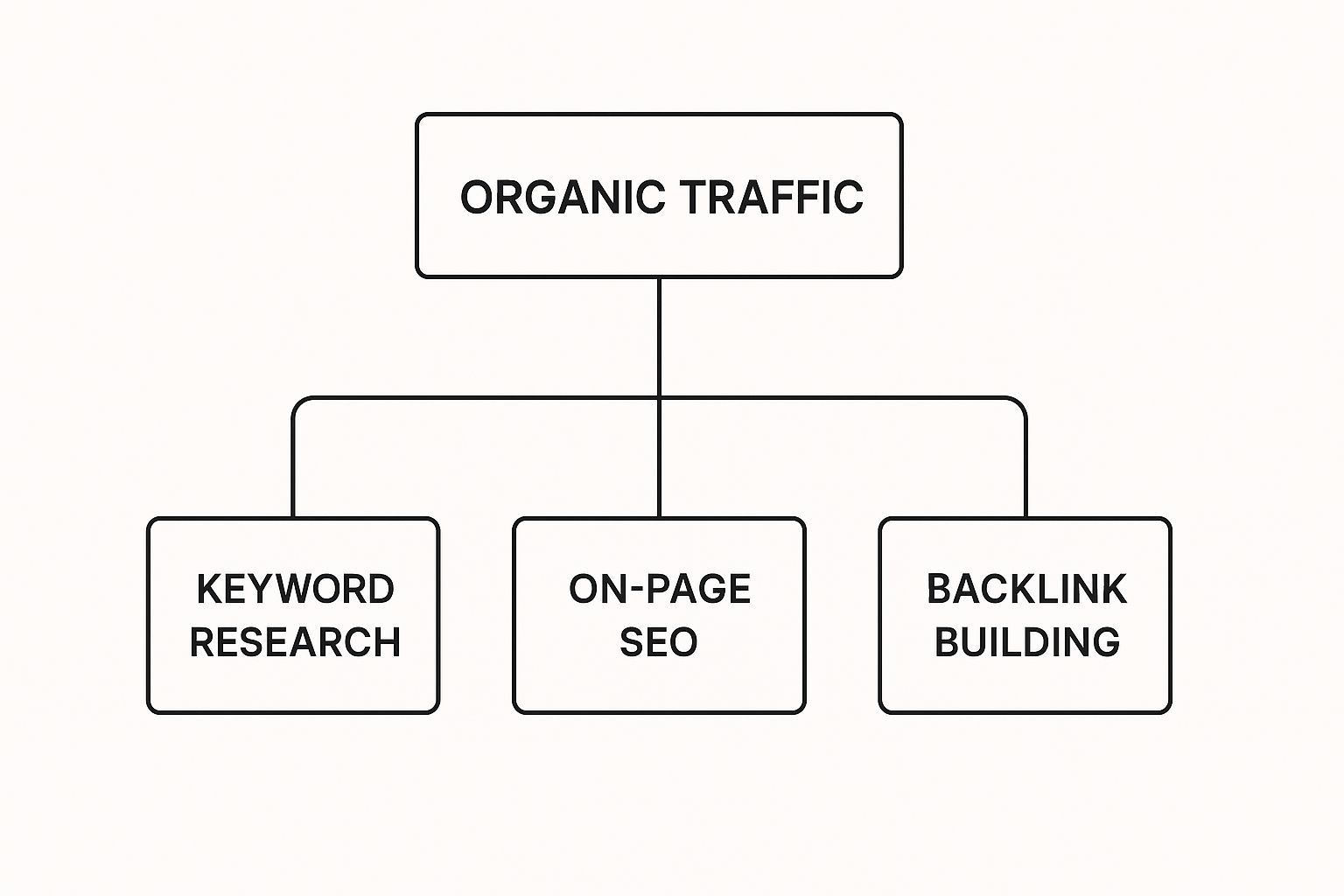
As you can see, it’s not about just one tactic. It’s the synergy between keyword research, on-page optimization, and authority-building that makes the magic happen.
To go deeper, check out these expert tips on increasing website traffic organically, which will give you the practical steps to master all three areas.
Creating Content That Actually Ranks and Drives Traffic

Let’s be honest: content is the absolute cornerstone of any organic traffic plan.
You can have the slickest, most technically sound website in the world, but if your content isn’t hitting the mark, you’re just shouting into the void.
The real secret is to stop writing what you think your audience wants and start creating content based on what you know they’re searching for.
This means we need to get smarter than just chasing broad, hyper-competitive keywords.
Instead, we’ll dig for the specific, high-intent phrases that your ideal customers are typing into Google when they’re actively looking for answers or a solution. We’re talking about long-tail keywords.
Uncovering High-Intent Keywords
Long-tail keywords are simply longer, more specific search queries.
Sure, they have less search volume individually, but their conversion rate is often through the roof. Why? Because the user’s intent is crystal clear.
Think about it. Someone searching for “shoes” is just window shopping.
But someone searching for “best waterproof trail running shoes for wide feet” is practically standing at the che