Yes, you absolutely can make money on Pinterest.
I’ve seen it firsthand, and it’s not some get-rich-quick scheme. It’s a legitimate strategy that works because Pinterest has become so much more than a place to find recipes or home decor ideas.
How People Actually Make Money on Pinterest
Think of Pinterest less like a social media site and more like a visual search engine. People aren’t just scrolling to kill time; they’re actively planning their future purchases.
They’re searching for “summer wedding guest dresses,” “small bathroom remodel ideas,” and “vegan meal prep for beginners.” That built-in buying intent is what makes the platform a goldmine for creators and businesses.
The numbers back this up.
Pinterest has soared to a record 578 million monthly active users globally as of Q2 2025. That’s a massive, engaged audience looking for solutions and inspiration, creating the perfect environment to earn an income.
The Main Ways to Monetize
So, how do you actually turn those pins into profit? It really comes down to a few core strategies, each suited for different types of creators.
- Affiliate Marketing: This is often the starting point for many. You share products from other companies and get a cut of the sale when someone buys through your unique link. The best part? You don’t need to create your own product.
- Selling Your Own Products: Got an Etsy shop, a Shopify store, or sell digital downloads like templates and e-books? Pinterest is one of the best ways to drive targeted traffic straight to your product pages.
- Driving Traffic to Your Blog or Website: For bloggers and service providers, Pinterest is a traffic powerhouse. You direct users to your site, where you can then earn money from display ads, sponsored content, or by selling your own services.
This chart breaks down how successful Pinterest creators typically blend these income streams.
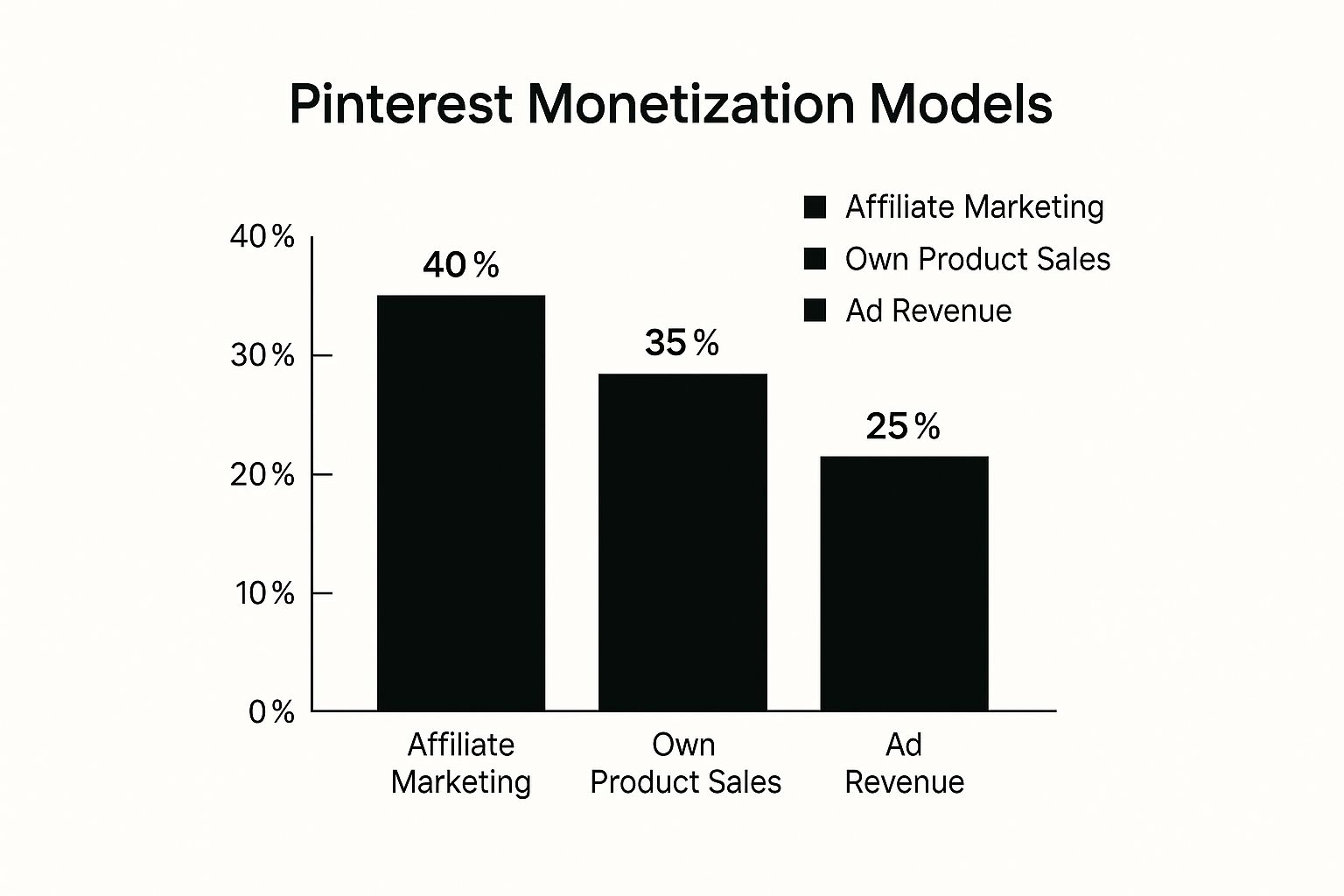
As you can see, there isn’t just one path. Most successful accounts create a healthy mix, but affiliate marketing and selling your own products often lead the pack for generating significant revenue.
To give you a clearer picture, I’ve put together a quick comparison of the most common methods.
Pinterest Monetization Methods at a Glance
| Monetization Method | Best For | Effort Level |
|---|---|---|
| Affiliate Marketing | Content creators without their own products, bloggers in specific niches (fashion, home, beauty). | Medium |
| Selling Physical Products | E-commerce brands, Etsy sellers, Shopify store owners. | High |
| Selling Digital Products | Designers, coaches, experts selling e-books, templates, or courses. | Medium |
| Driving Blog Traffic | Bloggers who monetize with ads, sponsored posts, or their own services. | High |
Each of these avenues has its own pros and cons, but they all share one common requirement: a consistent strategy. Finding the right mix for your niche and audience is where the magic really happens.
Building Your Foundation for a Profitable Account
Before a single pin earns you a cent, you have to treat your Pinterest presence like an actual business.
That means moving beyond a personal profile and laying down a professional foundation built for growth and monetization. It’s a simple switch, but one that’s surprisingly easy to overlook if you’re not thinking long-term.
The biggest reason? Data. Switching to a business account unlocks Pinterest Analytics.
This isn’t just about stroking your ego with follower counts; it’s your strategic playbook. Analytics shows you which pins are actually driving clicks, what topics your audience is hungry for, and where your traffic is coming from.
Without this insight, you’re just pinning in the dark, hoping something eventually takes off.
Why a Business Account Is Non-Negotiable
Making the switch is completely free, and it’s the only way to get the tools you need to make money. Beyond the crucial analytics, a business account lets you run ads, use exclusive content formats, and claim your website.
This last part is a big deal. Claiming your website establishes credibility and unlocks Rich Pins, which automatically sync extra info from your site (like product prices or blog post titles) directly onto your pins, making them far more compelling.
If you want a step-by-step guide, check out our tutorial on how to create a Pinterest Business account. It walks you through the whole setup so you don’t miss any important settings.
Crafting a Profile That Attracts Buyers
Think of your profile as your digital storefront. Within seconds, it needs to tell both users and the Pinterest algorithm exactly who you are and what you’re all about.
- Your Bio: This is no place for vague quotes. You need to pack it with keywords your ideal customer is actively searching for. An Etsy seller, for instance, should use something like “Handmade Ceramic Mugs | Unique Pottery Gifts | Rustic Home Decor” instead of a generic “Creator and artist.”
- Profile Picture: A crisp, clear headshot or a sharp brand logo is a must. This builds trust and helps your profile become instantly recognizable as people scroll.
Your Pinterest bio is prime real estate for SEO. Think like your target customer—what search terms would they use to find you? Weave those keywords directly into your description to improve your account’s discoverability.
Structuring Your Boards for Strategic Growth
Your boards aren’t just for organizing pretty pictures; they’re strategic content hubs, much like categories on a blog. This means you need to name them with search in mind.
A DIY blogger, for example, would be missing a huge opportunity by naming a board “Cool Projects.” Instead, they should create specific, keyword-rich boards like “DIY Fall Home Decor,” “Budget-Friendly Outdoor Projects,” and “Easy Weekend Crafts for Kids.”
This simple strategy helps your content show up in relevant searches, connecting you with users who are already looking for the exact solutions you offer. Getting this structure right from the start is what turns casual browsers into a loyal, profitable audience.
Your Guide to Affiliate Marketing on Pinterest
If you’re looking to make your first dollar on Pinterest, affiliate marketing is usually the quickest way to get there.
The beauty of it is that you don’t need to create your own products. Instead, you get to be the trusted friend who connects your audience with things they’ll actually love, earning a commission when they buy.
It’s a simple idea.
You team up with brands you admire or join affiliate networks that fit your niche. Platforms like ShareASale, CJ Affiliate, and even Amazon Associates give you a massive catalog of products to promote.
For example, a food blogger can link to the exact air fryer they swear by in a recipe. A travel creator could promote their go-to camera gear with a pin showing off gorgeous vacation shots.
The whole model is built on one thing: trust. Your audience has to believe your recommendations are coming from a genuine place.
Finding and Vetting the Right Programs
The secret to making this work is picking partners that make sense for your content. If you start promoting random products just because they offer a high commission, you’ll lose your audience’s trust in a heartbeat.
A great place to start is by making a list of the tools, products, and services you already use and genuinely recommend. You’d be surprised how many of those companies have affiliate programs just waiting for you to join.
When you’re looking at a program, here’s what I always check:
- Commission Rate: What’s your cut? How much will you earn from each sale?
- Cookie Duration: This is a big one. It’s the window of time after someone clicks your link that you’ll still get credit for a sale. A 30-day window is way better than a 24-hour one.
- Brand Reputation: Is this a company you can stand behind? Do they have good reviews and a solid product?
Also, transparency is non-negotiable. You absolutely have to disclose that you’re using affiliate links.
A simple #ad, #sponsored, or #affiliatelink in your pin description does the trick. It’s an FTC requirement, but more importantly, it’s just the right thing to do.
Creating Affiliate Pins That Actually Convert
A pretty pin is nice, but a pin that gets clicks is what pays the bills. Your main job is to stop the scroll and make someone curious enough to click through to see the product.
This means your pin’s design and its description need to be working together perfectly.
Your visuals should show the result of using the product. Don’t just show a planner. Show a beautifully organized desk with the planner open, hinting at the calm, productive life it helps create.
We dive deep into high-converting templates and strategies in our guide on how to create stunning pins.
For the description, talk about benefits, not features. Nobody cares that a blender has a “1200-watt motor.” What they care about is that they can “Create the smoothest green smoothies in under 60 seconds.” You’re selling the solution, not the spec sheet.
Key Takeaway: Your affiliate pin needs to answer the user’s unspoken question. Someone searching for “small patio ideas” isn’t just looking for furniture; they’re trying to create a relaxing outdoor escape. Your pin has to sell that dream.
This approach works so well because people on Pinterest are already in a buying mindset—more than half of them see the platform as a place to shop.
And with a user base where 40% of U.S. households earn over $150,000 a year, you have a huge opportunity to promote both everyday items and more premium products.
If you match the right affiliate products with what users are already searching for, you can make a great income on Pinterest by truly serving your audience, not just selling to them.
Driving High-Intent Traffic to Your Own Website
While affiliate marketing is a fantastic way to start, the real, sustainable money on Pinterest comes from treating it as a powerful traffic engine for your own website.
This is where you shift from earning small commissions to building a long-term business on a platform you completely control.
Instead of sending Pinners to someone else’s product page, you’re bringing them home—to your blog or online store.
This is a game-changer.
You’re not just hoping for a one-time sale; you’re building an asset. You can capture their email, retarget them with ads, and build a community that trusts you and buys from you again and again.
The Blogger’s Traffic Multiplier Tactic
If you’re a blogger, one of the most effective things you can do is create multiple, distinct Pin designs for a single blog post.
This isn’t about spamming your followers. It’s about smart testing and stretching the reach of every piece of content you create. Think about it: a single article can appeal to different people for very different reasons.
Let’s say you wrote a post titled “10 Budget-Friendly Kitchen Upgrades.” You could create several Pins to test different angles:
- Pin 1: A bright, modern kitchen image with the text overlay “Affordable Kitchen Hacks.”
- Pin 2: A classic before-and-after shot with the text “Kitchen Remodel on a Budget.”
- Pin 3: A close-up on a stylish backsplash with the text “DIY Kitchen Projects Under $100.”
Each Pin hits a slightly different search query and visual preference. This dramatically increases the chances your article will get discovered.
Dive into your Pinterest Analytics, see which designs get the most clicks, and you’ll learn exactly what your audience wants. This simple approach turns every blog post into a traffic-generating machine.
Turning Inspiration Into Sales for E-Commerce
For anyone with an online store, Pinterest is a goldmine. You have a direct line to people who are actively looking for products to buy.
The trick is making the leap from discovery to purchase as smooth as possible. You do this with shoppable pins.
These aren’t your average Pins.
They pull real-time pricing and stock information directly from your e-commerce platform, like Shopify.
When someone sees your product—maybe one of your handmade ceramic mugs styled on a cozy coffee table—they can instantly see the price and click straight to your site to buy it.
By connecting your store’s product catalog, you transform your Pinterest boards from simple mood boards into interactive, shoppable storefronts. You’re removing all the friction from the buying process and converting a passive browser into a customer right when their interest is highest.
Ultimately, viewing Pinterest as the top of your sales funnel is the most profitable long-term play.
You create beautiful, helpful content that draws people in, guides them to your website, and then converts that high-intent traffic into email subscribers and loyal customers.
Selling Your Own Products and Services Directly
Forget just driving blog traffic—Pinterest is a seriously powerful sales channel for your own products and services.
This is where you can really lean into the visual nature of the platform and turn all that inspiration into actual revenue. People come to Pinterest ready to plan and buy, which makes it the perfect place to show them what you’ve got.
The real trick is to ditch the sterile, boring product shots.
Instead, you want to create content that’s aspirational and genuinely helpful. Weave your products into a lifestyle that your target audience dreams of. This approach feels so much more natural and builds the trust you need to make a sale.
Showcasing Your Digital Products
If you’re selling digital goods—think ebooks, design templates, or online courses—your entire Pinterest strategy needs to revolve around the transformation your product delivers.
Don’t just pin a flat mockup of your ebook cover. You need to create Pins that scream “this is the end result!”
Let’s say you’re selling a digital meal planning guide. Instead of just showing the PDF, your Pins should feature things like:
- A stunning photo of a perfectly organized fridge, stocked with prepped meals.
- Bold text overlays that promise a benefit, like “Save Hours Every Week With This Meal Plan.”
- An image of a happy family enjoying a relaxed dinner together.
These visuals don’t sell a digital file; they sell the benefit—less stress and more quality time. You’re showing people the solution to a problem they have, and your product just happens to be the key.
Your Pin’s job is to make someone stop scrolling and think, “That’s what I want my life to look like.” When you frame your digital product as the tool to get them there, you’ve created a compelling reason to click and buy.
Marketing Physical Goods Effectively
For those of you with physical products on sites like Etsy or Shopify, the game plan is similar. You need to help Pinners visualize your item in their own lives.
Lifestyle photography is your absolute best friend here.
Don’t just post a photo of your scented candle against a plain white background.
Show it styled on a cozy nightstand next to a great book and a steaming cup of tea. If you sell handmade jewelry, get some models (or friends!) to wear your pieces with different outfits.
Providing that context is a huge part of the buying journey. It helps people see exactly how your product fits into their world.
To really get your products organized and tap into what’s trending, give these tactics a shot:
- Create Curated Collection Boards: Group your products by a specific theme, like “Minimalist Home Office Decor” or “Cozy Autumn Essentials.” This makes it easy for people to find related items.
- Build Seasonal Gift Guides: Get ahead of the holidays by creating boards like “Unique Mother’s Day Gift Ideas” or “Holiday Gifts For Him.” Pinners are planners, so start these months in advance.
- Use Video Pins: A quick video showing your product in action can be a game-changer. Imagine a short, satisfying clip of someone potting a plant in one of your handmade ceramic planters. It’s so much more engaging than a static photo.
This whole approach of embedding your products into inspiring content is the core of selling on Pinterest.
The goal is never a hard sell. You’re offering value and ideas first, with your product naturally presented as part of the solution.
When you work with the way people already use the platform, you can successfully make money off Pinterest selling the amazing things you create.
Common Questions About Making Money on Pinterest
So, you’re ready to start making money on Pinterest, but a few questions are probably rattling around in your head. It’s totally normal.
Most people have the same uncertainties when they’re just starting out. Let’s tackle some of the biggest ones head-on.
The first thing people usually ask is, “Does Pinterest pay you directly?” The short answer is no. Pinterest isn’t like YouTube where you get a check for views. Instead, you earn money through Pinterest by using it to send traffic to other places—like your blog, your online store, affiliate products, or sponsored content.
Think of Pinterest as the giant, buzzing storefront that gets people in the door. The actual transaction happens somewhere else.
How Many Followers Do I Need to Start Earning?
This is a huge one, and honestly, it’s where Pinterest is completely different from platforms like Instagram or TikTok. You don’t need a massive following to make money.
I’ve seen accounts with just a few hundred followers start making affiliate sales.
Why?
Because Pinterest is more of a visual search engine than a social network. Your success isn’t really about your follower count; it’s about how well your pins rank in search results.
A single pin, optimized with the right keywords, can go viral and send thousands of clicks your way, even if your account is brand new.
Don’t get caught up in the vanity metric of followers. Your energy is much better spent creating high-quality, helpful pins that people are actively searching for. That’s the real secret to getting traffic and making sales.
How Long Does It Take to Make Money?
This is the million-dollar question, and I want to be real with you: this isn’t an overnight thing.
While you might get lucky and make your first affiliate sale in a few weeks, building a reliable income stream takes patience and consistency.
Here’s a realistic timeline based on what I’ve seen work for countless creators:
- Months 1-2: This is all about laying the groundwork. You’ll be setting up keyword-rich boards and consistently creating and publishing high-quality pins. Aim for 3-5 new pins a day. Traffic will probably be slow at first while the Pinterest algorithm gets to know your content.
- Months 3-6: By now, Pinterest is starting to understand and trust your account. You should see a noticeable uptick in your outbound clicks. This is typically when those first few affiliate sales or product purchases start trickling in, which is an amazing feeling!
- Months 6+: If you’ve stuck with a consistent strategy, this is where things can really take off. Your traffic can start to grow exponentially, and you could be well on your way to earning a steady, reliable monthly income.
Your niche and consistency are the biggest factors here. Visually-driven topics like recipes, home decor, and fashion often see faster results.
But no matter your niche, the answer to can you make money off Pinterest is a resounding yes—if you’re willing to put in the work with a smart, steady strategy.
Ready to Turn Your Pins Into A Fully Optimized Pins?
If you want Pinterest to actually pay you, every Pin that points to an offer or monetized post needs to be intentional, not rushed.
To do this, use PostPaddle’s FREE Pin Optimization Checklist as a quick final step before publishing, so you regularly pause to review your money-focused Pins and keep your output consistent and deliberate instead of random.
FAQs
Can you actually make money from Pinterest
Yes. Pinterest can make money indirectly by sending targeted traffic to places that earn for you such as a blog with ads, affiliate posts, digital products, services or an email list that later sells offers. The platform itself is a traffic engine and the income comes from what you send that traffic to.
What are the main ways to make money on Pinterest
Common monetization paths include affiliate marketing, driving visitors to a blog or website with ads, selling digital products like templates and courses, promoting services such as coaching or design and growing an email list that you later monetize with launches and promotions. Many creators use a mix of these over time.
Do I need a big following to earn money from Pinterest
A huge follower count is not required. Because Pinterest works like a visual search engine, even accounts with modest followers can earn if their pins rank for the right keywords and send consistent, high intent traffic to monetized pages.
How long does it take to start seeing income from Pinterest
Results vary, but most people need at least a few weeks to a few months of consistent pinning before they see meaningful traffic and earnings. The timeline depends on how many optimized pins you publish, how strong your offers are and how well you track and improve what works.
Do I need my own website to make money from Pinterest
Having your own website or landing pages gives you the most control and long term potential, but it is not the only option. You can also send traffic to affiliate links, online marketplaces or signup pages for digital products and services while you build out your full site.