Want to promote your website without spending a dime?
It really comes down to two things: creating a great online experience and then making sure people can actually find it.
This isn’t about some secret trick; it’s about smart, foundational SEO, creating genuinely useful content, and engaging with your community.
Do this right, and you’ll build an asset that brings in visitors long-term, no ad budget required.
Build Your Foundation for Lasting Free Traffic
Before you even think about promotion, you have to be brutally honest: is your site actually worth visiting?
All the promotion in the world won’t save a slow, confusing, or broken website. Think of it like prepping your storefront for a grand opening.
You wouldn’t invite customers into a messy shop, right? The same goes for your website.
This foundational work is what makes or breaks your efforts. When people finally land on your site, you want them to have a great experience that makes them stick around, click through, and maybe even come back later.
If you skip these basics, it’s like trying to fill a leaky bucket—all your hard work will just drain away.
Make Your Site User-Friendly and Mobile-Ready
Here’s a hard truth: the majority of web traffic is now on mobile. If your site is a pain to use on a smartphone, you’re waving goodbye to over half your potential audience right out of the gate.
This is non-negotiable. Google knows it, which is why they prioritize mobile-friendly sites in their rankings. Your goal should be a clean, intuitive design where users aren’t pinching and zooming just to read your text.
Everything should work flawlessly, whether they’re on a desktop or their phone. It’s just as much about good customer service as it is about SEO.
Nail Your Basic On-Page SEO
On-page SEO is all about sending clear signals to search engines like Google, telling them exactly what your pages are about. It’s the technical nuts and bolts that help your content get discovered.
For every single important page on your site, you need to get these core elements right:
- Title Tags: This is your page’s headline in search results and the browser tab. Make it clear and compelling, and always include your main keyword.
- Meta Descriptions: Think of this as the ad copy for your page. While it doesn’t directly impact rankings, a great description can be the difference between someone clicking your link or your competitor’s.
- Headings (H1, H2, H3): Don’t just make text bold and big. Use proper headings to structure your content. The main title gets the H1 tag, with subtopics organized under H2s and H3s. This makes it scannable for both humans and search engines.
- Image Optimization: Huge image files are the number one cause of slow websites. Learn how to optimize images for the web to keep your pages fast without sacrificing visual quality. A quick tutorial can be found here: https://www.postpaddle.com/blog/how-to-optimize-images-for-web
At the heart of all free promotion is the goal of getting people to talk about you. A crucial concept here is understanding earned media.
This is the publicity you get from genuine word-of-mouth, social shares, and mentions—all of which happen a lot more when your website is a pleasure to use.
Getting these fundamentals in place creates a solid launchpad for every other promotional tactic you’ll try.
This isn’t a “set it and forget it” task, but an ongoing commitment to making your site a valuable place to be. A strong foundation doesn’t just help; it multiplies the effect of everything else you do.
Master SEO to Attract High-Intent Visitors
Of all the ways to promote your website for free, Search Engine Optimization (SEO) is the undisputed champion for long-term growth.
Think of it this way: paid ads are like renting an apartment—the moment you stop paying, you’re out. SEO is like building a house.
It takes work upfront, but once it’s built, it becomes a valuable asset that brings in a steady stream of people who are actively looking for what you offer.
The whole game starts with understanding the language of your audience. You don’t need a massive budget for fancy tools to figure this out.
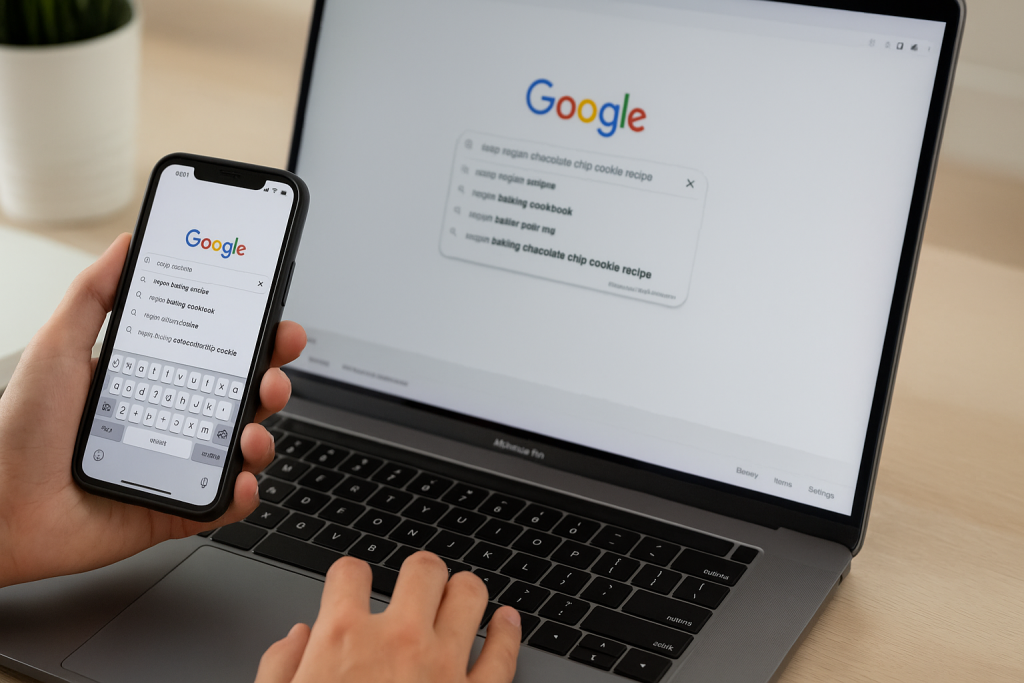
Just open Google and start typing. The autocomplete suggestions alone are a goldmine for seeing what real people are searching for.
Find Your Golden Keywords
The first step is to get inside your ideal customer’s head. What are they typing into that search bar?
Imagine you run a fitness blog. Are they searching for a broad term like “vegan baking recipes,” or are they getting more specific with something like “easy vegan chocolate chip cookie recipe”?
That second phrase is a long-tail keyword. It gets fewer searches, sure, but the person behind it knows exactly what they want, making them far more likely to engage with your content.
Start by brainstorming a few big-picture topics for your site—”strength training,” “HIIT workouts,” “healthy meal prep.”
Then, for each one, start digging into the more specific questions and phrases people would use. This simple exercise is how you align what you create with what people are actually demanding.
Create Content That Search Engines (and People) Love
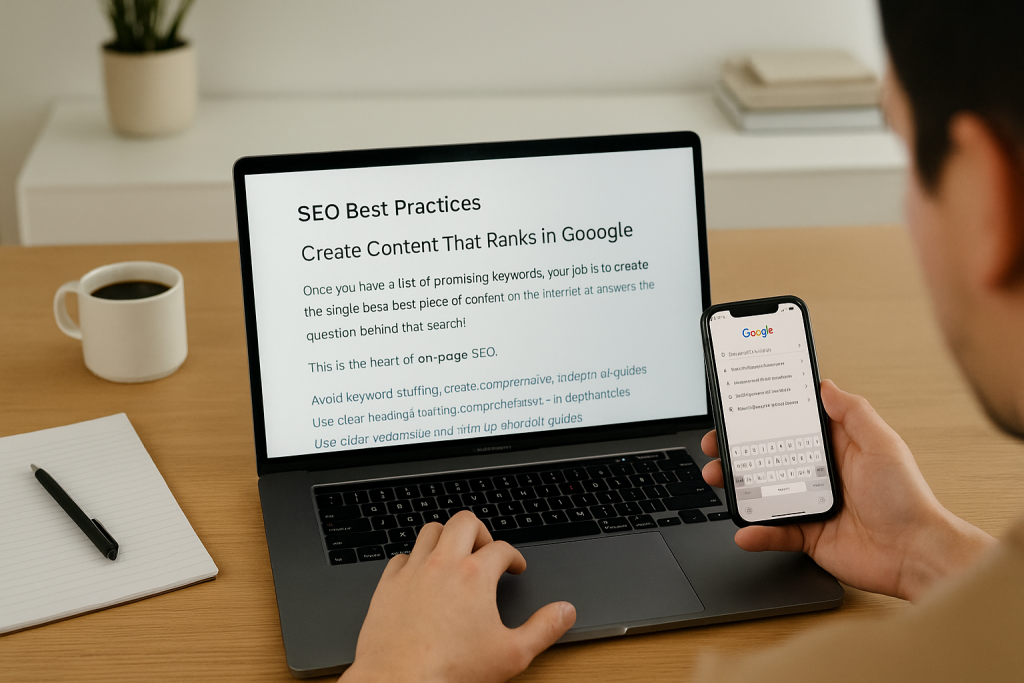
Once you have a list of promising keywords, your job is to create the single best piece of content on the internet that answers the question behind that search. This is the heart of on-page SEO.
Forget about keyword stuffing or old-school tricks. Today, it’s all about genuine value. Focus on creating comprehensive, in-depth articles and guides.
Use clear headings to break up your text, keep your paragraphs short, and sprinkle in relevant images or videos.
This doesn’t just make your content more enjoyable for readers; it gives search engines clear signals about what your page is about.
For a deeper dive into crafting content that ranks, our guide on how to increase website traffic organically has some great, actionable tips.
Don’t underestimate the power of showing up on page one. Organic search is still the top dog for ROI, with 49% of marketers saying it’s their best-performing channel.
The first result on Google alone pulls in an average click-through rate of 39.8%, while less than 1% of searchers ever click to the second page. That’s a massive drop-off.
Build Authority with Backlinks
Backlinks are basically endorsements from other websites. When a credible site links to one of your pages, it’s telling Google, “Hey, this content is legit and trustworthy.”
This is a huge factor in how you rank. So, how do you earn these valuable links without paying for them?
It all comes down to creating content worth linking to and then getting it in front of the right people. Here are a few proven, no-cost methods:
- Guest Posting: Find other blogs in your niche and offer to write a high-quality article for their audience. In return, you’ll almost always get a link back to your site in your author bio.
- Forum and Community Engagement: Become a helpful voice in online communities like Quora, industry-specific forums, or even Facebook Groups. When it makes sense and adds value, you can share a link to a relevant resource on your site.
- Directory Listings: Submitting your website to reputable online directories in your industry is a classic, easy way to pick up some foundational links.
One under-the-radar strategy that’s gaining steam is leveraging Reddit threads for evergreen SEO, as Google is increasingly showing these community-driven discussions in search results.
To keep you on track, here’s a simple breakdown of the essential tasks for getting your SEO off the ground without spending a dime.
Core SEO Action Plan for Free Promotion
This table summarizes the core, high-impact tasks you should focus on to drive organic traffic.
| SEO Task | Objective | Free Tools to Use |
|---|---|---|
| Keyword Research | Discover the exact phrases your audience uses to find solutions. | Google Keyword Planner, Google Trends, AnswerThePublic |
| Content Creation | Build pages that deeply satisfy what a searcher is looking for. | Google Docs, Grammarly (free version), Hemingway App |
| Link Building | Earn “votes of confidence” from other sites to boost your authority. | HARO, Industry Forums, Social Media |
Getting a handle on these SEO fundamentals is the most reliable way to promote a website for free.
It requires patience and consistent effort, but the payoff is a powerful, self-sustaining engine that brings high-intent visitors to your digital doorstep—no ad budget required.
Use Content Marketing as Your Growth Engine

Let’s be clear: content is the engine behind almost every effective free promotion strategy. When you do it right, content marketing isn’t just about writing blog posts.
It becomes a powerful system that attracts the right people, keeps them engaged, and builds genuine trust—all without spending a dime on ads.
The trick is to stop thinking about one-off articles and start building a strategic content library.
Every single piece you publish should have a job to do, whether it’s answering a critical question or bringing someone new to your website.
Think Beyond the Basic Blog Post
While detailed articles are often the backbone of a good strategy, your content world needs to be bigger. Stepping outside the “blog post” box opens up so many new ways to reach people.
Some folks love diving into a long-form guide, while others just want a quick list or something visual.
Here are a few powerful, no-cost content formats to get you started:
- Ultimate “How-To” Guides: Create the most comprehensive resource you can on a major pain point for your audience. Your goal is to own that topic, becoming the go-to answer for anyone searching for that specific solution.
- Expert Roundups: This one is a classic for a reason. Reach out to a handful of experts in your field, ask them one smart question, and compile their answers. Not only do you get amazing insights, but every expert you feature is likely to share the final article with their own followers, which can massively expand your reach overnight.
- Real-World Case Studies: Show, don’t just tell. Walk through how a client or customer found success with your product or methods. A real story with real results provides powerful social proof that connects with people far more than a simple claim ever could.
“Your content is a magnet. The more specific and valuable you make it, the stronger its pull will be on the right audience.
It’s not about creating content for everyone; it’s about creating the perfect content for someone.”
This visual breaks down how good content works with search engines to bring you a steady stream of traffic.
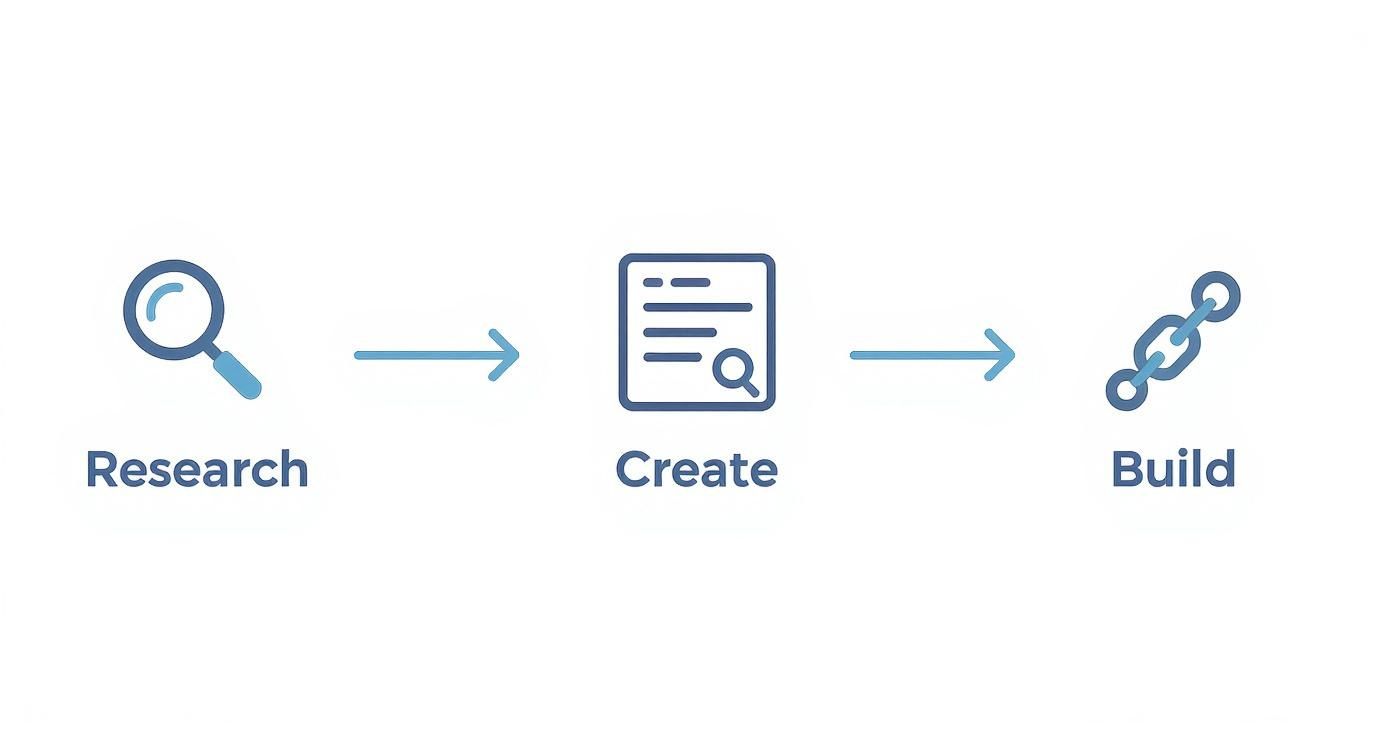
The main thing to remember is that promotion is a cycle, not a one-time push.
You have to consistently figure out what your audience needs, create great content to meet that need, and then build connections to help spread the word
Finding a Never-Ending Supply of Ideas
The most common wall people hit is just figuring out what to write about. The good news? Your audience is constantly telling you what they want. You just need to know where to listen.
This is a huge part of learning how to promote a website for free, because truly relevant content is what gets shared.
Instead of guessing, use these free resources to find proven ideas:
- Listen in on Communities: Spend some time in forums like Reddit and Quora. Find the subreddits and topics related to your niche and just observe. What questions are people asking again and again? Every one of those repeated questions is a golden content idea.
- Check Out the Competition: See what your competitors are ranking for in Google. There are free tools that can show you their most popular articles. The goal isn’t to copy them, but to spot successful topics and then create something way better—more detailed, more up-to-date, or with a totally fresh perspective.
- Monitor Google Trends: This is a great way to see which topics are heating up. You can get ahead of a trend and create content that catches a wave of public interest right as it’s building.
Having a solid process for turning these ideas into published content is crucial.
If you’re looking for a structured approach, our guide on how to develop a content strategy lays out a clear roadmap for building a cohesive, traffic-driving plan.
The Power of Repurposing Your Content
Let’s face it, creating truly great content takes a lot of time and effort. The absolute biggest mistake I see people make is publishing something once and then moving on.
The real secret to getting the most out of your hard work is content repurposing.
This is my all-time favorite technique because it lets you get so much more mileage out of a single piece of work. One deep-dive, 2,000-word blog post can be the source material for dozens of other content assets.
Here’s how a single article can be broken down and reborn:
- Social Media Snippets: Pull out 5-10 of the most compelling stats, quotes, or tips. Each one becomes its own individual post for Twitter, LinkedIn, or Facebook.
- A Shareable Infographic: Turn the main points or data from the article into a simple, eye-catching infographic. This is perfect for visual platforms like Pinterest.
- A Short Video Script: Boil the article down to its core message and turn that into a script for a quick YouTube Short, TikTok, or Instagram Reel.
- Your Next Email Newsletter: Feature a summary of the article in your newsletter, giving your subscribers the highlights and a link back to the full post.
When you adopt this “create once, distribute forever” mindset, you make every piece of content you produce work harder and longer for you.
This is how content marketing becomes a truly sustainable growth engine for your website.
Engage Online Communities and Social Media
Social media and online forums can be absolute goldmines for promoting your website without spending a dime.
But here’s where most people go wrong: they treat these platforms like a megaphone, just blasting out links to their latest content. That’s a huge mistake.
The real power comes when you stop broadcasting and start building a genuine community.
And forget trying to be everywhere at once. That’s a fast track to burnout with nothing to show for it.
Instead, pour your energy into the one or two places where your ideal audience is already hanging out. The goal here is real, authentic engagement, not just adding to the internet’s noise.
Choose Your Platforms Wisely
Before you do anything else, you have to figure out where your people are. Don’t just jump on a platform because it’s popular; pick the one that actually makes sense for your brand and what you’re trying to accomplish.
If you’re in the B2B space, for instance, your time is way better spent on LinkedIn, where you can jump into industry-specific groups and connect with other professionals.
On the other hand, if your brand is highly visual—say, a home decor blog or a shop selling handmade jewelry—a platform like Pinterest is going to be your best friend.
Here’s a quick rundown to help you decide:
- LinkedIn: The go-to for B2B services, professional networking, and career advice.
- Pinterest: A visual discovery engine that’s perfect for products, recipes, and anything with strong imagery. A good pin can drive traffic for months, even years.
- Facebook Groups: Fantastic for building tight-knit communities around specific hobbies, local events, or shared interests.
- Reddit: Home to thousands of super-niche communities (called subreddits) filled with deeply passionate and knowledgeable people.
- Instagram/TikTok: Great for personality-driven brands and those targeting a younger audience.
Once you’ve found your spot, commit to it. It’s far better to be a respected voice in one or two communities than a forgotten ghost in ten.
Provide Value Before You Ask for Anything
Let’s get one thing straight: the golden rule of community engagement is to give more than you take.
Dropping a link to your website in a Facebook Group or Reddit thread without any context is the digital version of walking into a party and shouting about your business.
It’s annoying, it doesn’t work, and you’ll probably get kicked out.
Start by just listening. Pay attention to the questions people are asking. What are their biggest challenges? Then, use your expertise to offer genuinely helpful advice, with absolutely no strings attached.
For example, if you run a personal finance blog and see someone on Reddit asking for budgeting tips, don’t just reply, “Read my post!” Instead, write out a few practical tips right there in the comments.
After you’ve built a reputation for being helpful, people will naturally get curious about what you do.
The idea is to become the go-to expert in your niche, not just another brand shouting for attention. When you consistently provide value, people will start seeking out your website on their own.
This is how you build trust, and trust is the real currency online. Over time, when it’s actually relevant, you can share a link to a resource on your site.
Because you’ve already put in the work and established credibility, people will see it as a helpful suggestion, not spam.
A Practical Engagement Workflow
Putting this into practice doesn’t mean you have to live on social media. It’s all about having a consistent and efficient process.
Here’s a simple workflow you can adopt today:
- Find 3-5 Relevant Communities: Pinpoint a handful of active Facebook Groups, subreddits, or forums where your audience is.
- Set Aside 15-20 Minutes Daily: Block out a specific time each day to check in on these groups.
- Look for a Question to Answer: Scan recent posts for a problem you can solve or a question you can answer thoughtfully.
- Give a Genuinely Helpful Response: Write a detailed, useful comment. No pitching.
- Share a Link Only When It Adds More Value: If you happen to have a blog post that goes into even greater detail, you can add it at the end. Try something like, “I actually wrote a full guide on this if you want to dive deeper.”
This approach turns social media from a chore into a powerful way to build relationships. You’re not just getting free promotion; you’re building a network of people who trust you and are excited to see what you do next.
Amplify Your Reach with Strategic Partnerships
Working in a silo to promote your website is a long, slow grind. If you really want to pick up the pace, the smartest move is to tap into audiences that already exist.
Strategic partnerships let you borrow credibility and reach from established players in your niche, putting your brand in front of a warm audience that’s ready to listen.
This isn’t about shelling out cash for big joint ventures. It’s about finding smart, no-cost ways to collaborate.
The goal is to create win-win scenarios where both you and your partner get valuable exposure. Think of it as finding allies who are already talking to the people you want to reach, just from a slightly different angle.
Become a Valued Guest on Other Blogs
Guest posting is a classic for a reason—it flat-out works. It remains one of the most effective ways to share your expertise, build authority, and get a valuable backlink in front of an engaged, pre-built audience.
The secret is to stop thinking about “getting a link” and start focusing on “providing immense value.”
Forget the generic, copy-pasted outreach emails; they’re a one-way ticket to the trash folder. Instead, actually read the blog you want to write for.
When you reach out, mention a specific article you enjoyed and briefly explain why it resonated with you.
Then, pitch a few unique, well-researched topic ideas that would genuinely help their readers and fill a gap in their content library.
A successful guest post isn’t really about you. It’s about serving the host’s audience. When your primary goal is to deliver an incredibly helpful piece of content for them, the traffic and authority for your own site will naturally follow.
This simple, thoughtful approach proves you’ve done your homework and respect their work.
It dramatically increases your chances of getting a “yes” and, more importantly, building a real relationship that can be far more valuable than a single link.
Create Something Together with Co-Marketing
Find a business that offers a complementary, non-competing service and team up.
Co-marketing lets you both pool your resources and audiences, making a much bigger splash than either of you could on your own. It’s a fantastic tactic when you’re figuring out how to promote a website for free.
Here are a few no-cost co-marketing ideas to get you started:
- Co-host a free webinar. Partner with an expert in an adjacent field for a live educational session. For instance, a web designer could team up with a copywriter for a webinar on “Creating a High-Converting Homepage.”
- Create a joint resource. Develop a comprehensive checklist, template, or eBook together. A social media manager and a graphic designer could create “The Ultimate Brand Starter Kit.”
- Run a collaborative giveaway. Each partner contributes a prize (like a free product or a one-hour consultation) and promotes the giveaway to their audience, leading to a natural cross-pollination of followers.
The best partnerships come from a simple formula: your audiences share similar problems, but you offer different solutions. This makes the collaboration feel authentic and valuable to everyone involved.
Share Your Expertise on Podcasts
Getting interviewed on a podcast is like guest posting on steroids. Instead of just seeing your words on a page, listeners get to hear your voice, your passion, and your personality for a solid 30-60 minutes.
It’s a powerful way to build a much deeper level of connection and trust.
First, identify podcasts that your ideal customers are actually listening to. You don’t need to land on the biggest shows in the charts. Smaller, niche-specific podcasts often have incredibly loyal and engaged communities.
When you pitch yourself as a guest, make it incredibly easy for the host to say yes. Don’t just send a generic “I’d love to be on your show” email.
Instead, suggest 3-5 specific, compelling topics you can speak on that are perfectly aligned with their podcast’s theme. Frame your entire pitch around the value you will bring to their listeners.
Every host’s number one job is creating a great episode for their audience—show them exactly how you’ll help them do that.
Let an AI Co-Pilot Handle the Pinterest Side of Your Strategy
You’ve already done the hard part: you have a website and content worth visiting.
Now it’s time to turn those articles and pages into consistent Pinterest traffic, without adding hours to your week.
Pinterest GPTs helps you spin your best blog posts into click-worthy Pin ideas, titles and descriptions that match how people actually search on Pinterest.
Just drop in your topic or URL and let the AI suggest optimized copy, fresh angles and Pin variations that all point straight back to your site.
Whether you’re just getting started or tightening up your free promotion strategy, this is an easy way to add a Pinterest “traffic lane” to your website without paying for ads or hiring a specialist.
Common Questions About Promoting a Website for Free
So you’re ready to promote your website without spending a dime. That’s smart, but it also means you’re trading money for time and effort.
It’s totally normal to have a few questions before you dive in, especially when you want to make sure you’re investing that time wisely.
Let’s clear up some of the most common things people wonder about when they start growing their site on a zero-dollar budget. These aren’t just random what-ifs; they’re the practical questions that will shape your strategy and your success.
How Long Until I See Real Results?
This is always the first question, and the most honest answer is: it’s going to take some time. Free promotion is a marathon, not a sprint. You have to be patient.
Sure, a thoughtful comment on a popular blog or a helpful answer on Reddit might send a small burst of traffic your way almost immediately. But the real, game-changing growth? That comes from strategies that need time to build momentum.
For things like SEO and content marketing, you should mentally prepare for a 3-6 month runway before you start seeing a noticeable, steady stream of organic visitors.
Search engines have their own process; they need to find your site, crawl your pages, and figure out where you fit in. It’s a lot like planting a garden—you don’t get tomatoes the day after you plant the seeds, but consistent care early on leads to a big payoff down the road.
The secret isn’t one viral hit; it’s consistency. Showing up day in and day out is what builds the kind of momentum that makes free promotion work. This commitment is what separates the sites that grow from the ones that fade away.
What Is the Most Effective Free Method?
Everyone wants to find that one silver bullet, but the truth is, the best strategy is usually a mix of different tactics. That said, if I had to pick one for the best long-term payoff, it would be SEO. Why?
Because it brings people to your site who are already looking for what you have to offer. That’s a highly qualified visitor right there.
But the “best” method really depends on who you are and who you’re trying to reach.
- Selling something visual? If you have a shop for handmade jewelry or a stunning food blog, a platform like Pinterest could get you results way faster than Google. It’s a visual search engine where your content can keep getting discovered for months or even years.
- A B2B service provider? If you’re a consultant or run a software company, your time is probably better spent on LinkedIn. Sharing your expertise and connecting with others in your industry will build your authority and bring in leads.
- In a niche hobby space? Find the dedicated subreddits or active Facebook Groups where your people hang out. Becoming a valued member of those communities can build an incredibly loyal following fast.
The smartest play is to work on your long-term SEO foundation while picking one or two other channels where you know your audience lives. This gives you a balanced approach that brings in some early wins while you build for the future.
Can I Really Get Significant Traffic with Zero Budget?
Absolutely, one hundred percent. It’s a huge myth that you need a big ad budget to make a real impact online.
When you’re promoting for free, you’re simply swapping a financial investment for an investment of your time, creativity, and effort.
The trade-off is clear: the less cash you spend, the more hustle you have to put in.
Countless success stories are built on the back of fantastic content, smart SEO, and genuine community building. By consistently creating things people find valuable and building real relationships, you can attract an audience that rivals what others pay for with ads.
The key is to be strategic. Don’t try to be everywhere at once. Pinpoint the highest-impact activities for your specific situation and pour your energy into those. That kind of focused effort is how you win at free website promotion.