
Before you can even start thinking about racking up followers, you need to get your house in order.
A solid Pinterest foundation is non-negotiable.
It all starts with a keyword-rich business profile and a steady stream of high-quality Pins that your ideal audience is actually looking for.
I’ve seen so many people treat Pinterest like just another social network.
That’s a mistake. It’s a visual search engine, and if you want to be discovered, you have to play by its rules.
Build a Follow-Worthy Pinterest Foundation
Let’s be real: you have to give people a compelling reason to click that “Follow” button. Your Pinterest profile is like the front door to your brand.
A weak first impression will have potential followers bouncing before they even see your brilliant content.
The goal isn’t to just check boxes; it’s to create a magnetic, professional presence that pulls people in.
First things first: you absolutely must have a Pinterest Business account.
If you’re still on a personal profile, switching is free, easy, and critical for growth.
Doing so unlocks the good stuff, like Pinterest Analytics and the ability to claim your website.
Craft a Keyword-Rich Profile
Your profile is prime SEO real estate. Every single element needs to work together to tell both users and the Pinterest algorithm exactly what you’re all about.
- Username: Keep it simple and consistent. It should match your brand name and your other social media handles so people can find you without a scavenger hunt.
- Profile Picture: Use a high-quality, professional headshot if you’re a personal brand, or a crisp, clear logo. This is your first handshake—it builds instant recognition and trust.
- Display Name: This is where you can really shine. Don’t just put “Jane’s Kitchen.” Try something descriptive like “Jane’s Kitchen | Easy Vegan Recipes.” See how that immediately tells visitors the value you offer and slips in a powerful keyword?
- Bio: You’ve got a small space to make a big impact. Clearly state who you help and what you do for them, weaving in your most important keywords naturally. I often recommend this simple formula: “I help [your target audience] achieve [their desired outcome] through [your content].”
Real-World Example: Imagine a food blogger targeting overwhelmed parents.
A display name like “Quick Family Meals” coupled with a bio like, “Helping busy parents find easy, 30-minute dinner recipes the whole family will love.
Follow for weekly meal plans and healthy snack ideas!” is infinitely more effective than something generic.
Organize Your Boards for Discovery
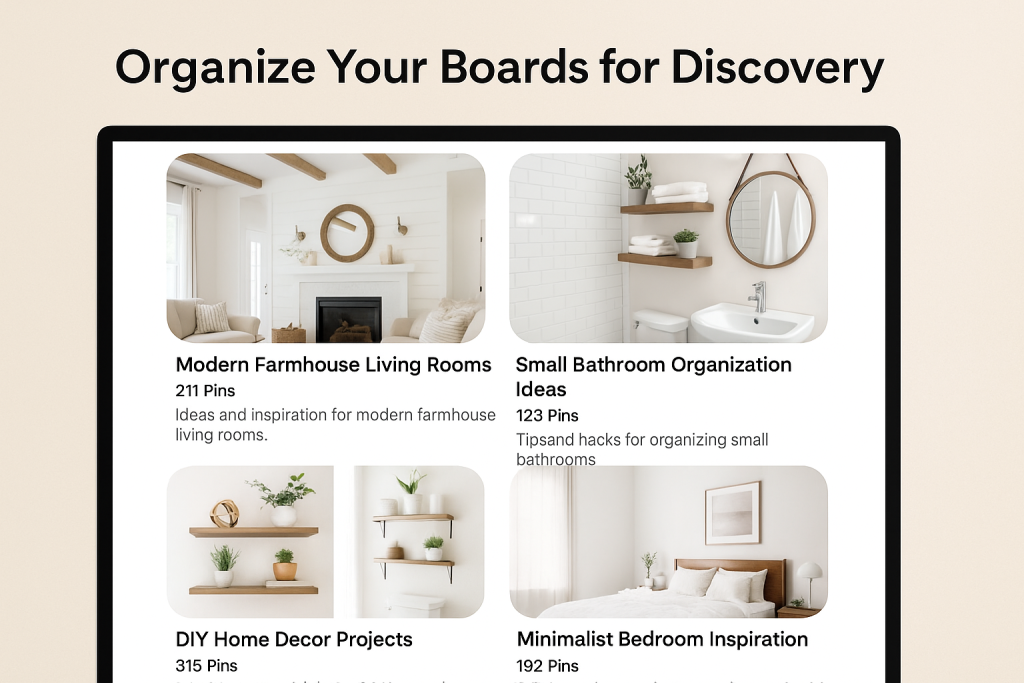
Think of your boards as the aisles in your brand’s store. A jumbled mess of random, unfocused boards just looks sloppy and confuses potential followers.
What you want is a clean, organized structure with specific, keyword-optimized board titles.
Put yourself in your audience’s shoes. If you’re a home decor blogger, a single, massive “Home Decor” board is a missed opportunity.
Instead, get specific with niche boards like:
- Modern Farmhouse Living Rooms
- Small Bathroom Organization Ideas
- DIY Home Decor Projects
- Minimalist Bedroom Inspiration
This targeted approach not only makes your profile a breeze to navigate but also helps your content rank for a much wider range of search terms.
And don’t forget to give each board a clear, keyword-rich description explaining exactly what people will find inside.
Claim Your Website
This is a critical step that so many creators skip, and it’s a huge mistake. Claiming your website is how you officially link your site to your Pinterest account, and it comes with some serious perks.
For starters, it adds your profile picture and a “Follow” button to any Pin that comes from your site, which screams authority.
More importantly, it unlocks detailed analytics for Pins from your domain.
This is gold. You can see precisely which content is driving clicks and engagement, which is essential for refining your strategy over time.
The process is pretty painless and usually just involves adding a meta tag to your website’s header.
Think of it this way: an unclaimed website is like an anonymous tip, but a claimed website is a verified source.
Pinterest and its users trust verified sources more. Getting this done means your profile is now a cohesive brand hub, perfectly primed to attract the right audience.
Create Pins That Stop the Scroll
Let’s be honest: on Pinterest, your Pins are your currency. A polished profile gets you in the door, but it’s your visual content that convinces someone to actually stick around and hit that “Follow” button.
The goal is to create Pins that literally stop people mid-scroll, making them pause, click, and save.
This isn’t just about finding a pretty picture and slapping it up. A truly effective Pin is a deliberate mix of art and science, built to grab attention and communicate value in a split second.
Let’s break down what it takes to turn a simple image into a follower-generating machine.
Master the Anatomy of a Great Pin
After years of working with this platform, I’ve seen that the most successful Pins all share a few key traits.
They are designed for Pinterest’s vertical feed and are incredibly easy to understand at a glance.
Think of every single Pin as a tiny, compelling advertisement for your content or brand.
Here are the non-negotiable design elements you have to get right:
- Optimal Vertical Dimensions: Stick to a 2:3 aspect ratio. A size like 1000 x 1500 pixels is perfect because it takes up maximum screen real estate on mobile feeds, making your content stand out.
- High-Quality Imagery: This one’s a no-brainer. Use crisp, clear, and bright photos or graphics. It’s also interesting to note that images with warmer tones—think reds and oranges—tend to get more repins than those with cooler blues and greens.
- Readable Text Overlays: Add bold, high-contrast text directly onto your Pin image. This text needs to act like a headline, screaming value (e.g., “5-Ingredient Vegan Chili,” “Beginner’s Guide to SEO”).
- Subtle Branding: Always include your logo or website URL somewhere on your Pin. It doesn’t have to be huge, but it builds brand recognition and ensures you get credit as your Pin travels across the platform.
A common mistake I see is just pinning an image without context. A beautiful photo of chili is nice, but a Pin with the text overlay “The Easiest 30-Minute Chili Recipe” is infinitely more powerful.
It solves a problem and makes a promise.
Choose the Right Pin Format for Your Goal
Pinterest gives you a few different tools in your toolbox. Knowing which Pin format to use—and when—is what separates a scattered approach from a strategic one that actually grows your following.
Don’t just stick to one; mix it up to keep your content fresh and maximize your reach.
Standard Pins: These are the bread and butter of Pinterest.
A static image that links to an external URL, like your latest blog post or a product page. These are your go-to for driving traffic.
Video Pins: These short clips (usually 6-15 seconds) are fantastic for grabbing attention because they autoplay in the feed.
Use them for quick tutorials, behind-the-scenes content, or to show a product in action.
Idea Pins: Think of these as multi-page, story-like Pins that live on Pinterest (they don’t link out).
They are designed for storytelling and are heavily favored by the algorithm for building an audience directly on the platform.
Use them for step-by-step guides and lists. Because they encourage follows, they are an absolute powerhouse for follower growth.
Write Compelling, Keyword-Optimized Descriptions
While the visual is what stops the scroll, the description is what gets your Pin discovered in the first place.
This is where all that keyword research you did pays off. A well-written description tells both users and the Pinterest algorithm what your Pin is all about.
Weave your primary and secondary keywords into a few natural-sounding sentences. Tell the user exactly what they’ll get when they click.
For more detail, you can check out our complete guide on how to optimize Pinterest Pins for maximum visibility.
Here’s how this looks in practice across different niches:
| Niche | Pin Title | Pin Description Example |
|---|---|---|
| Food Blogger | 15-Minute Air Fryer Salmon | Looking for a quick and healthy weeknight dinner? This air fryer salmon recipe is ready in just 15 minutes! Perfect for a low-carb, high-protein meal. Get the full recipe here. #airfryerrecipes #salmonrecipe #healthydinner |
| DIY Home Decor | DIY Floating Shelves Tutorial | Learn how to build your own beautiful DIY floating shelves with our easy step-by-step guide. A perfect weekend project to add stylish storage to your living room. #diyshelves #homeproject #farmhousedecor |
| Personal Finance | How to Create a Beginner Budget | Ready to take control of your finances? Our guide on how to create a beginner budget will walk you through setting up a simple spending plan that works. Start saving money today! #budgetingforbeginners #personalfinance #savingmoney |
When you consistently apply these principles, you shift from just randomly pinning things to strategically creating assets designed for discovery.
That is the true foundation for attracting a loyal audience that can’t wait to see what you’ll share next.
Develop Your Pinterest Content Strategy
Pinning content at random is like throwing darts in the dark. You might hit the board eventually, but you’ll never hit the bullseye.
If you’re serious about gaining Pinterest followers, it’s time to shift from being a casual pinner to a focused content strategist.
This means every single Pin you create serves a purpose.

A solid plan turns your Pinterest efforts from a time-consuming chore into a predictable engine for attracting your ideal audience. Let’s get that engine built
Uncover What Your Audience Wants with Keyword Research
Before you even think about designing a Pin, you need to get inside your audience’s head. Guessing what they want is a complete waste of time.
Luckily, Pinterest has some fantastic built-in tools that let you see exactly what people are searching for.
Your best friend here is the Pinterest search bar. Start typing a broad term related to your niche, like “healthy recipes.”
Almost instantly, Pinterest will show you a dropdown list of popular, more specific searches real users are making, like “healthy recipes for weight loss” or “healthy recipes for picky eaters.”
These suggestions are pure gold.
Next, you’ll want to dig into Pinterest Trends. This tool is amazing for spotting seasonal patterns and up-and-coming trends by showing you the popularity of search terms over time.
For instance, you’d see that searches for “fall home decor” begin to spike every August.
That’s your cue to start creating that content well ahead of time, not in the middle of October when you’ve missed the wave.
I treat Pinterest keyword research like a treasure hunt. The goal is to collect a list of specific, high-intent phrases that my target audience is using.
These keywords become the foundation of everything I do next, from naming my boards to writing my Pin descriptions.
Establish Your Core Content Pillars
Once you’ve got a solid list of keywords, it’s time to bring some order to the chaos. You can’t be everything to everyone, so you need to define your core areas of expertise. \
We call these content pillars—the 3-5 main topics your account will be known for.
These pillars should be broad enough to spark plenty of ideas but specific enough to attract a loyal, niche audience.
Grouping your keywords under these pillars gives your strategy focus and structure.
A personal finance blogger, for example, might land on these pillars:
- Budgeting for Beginners: Covering everything from creating a budget to savings challenges and expense tracking apps.
- Investing Basics: Breaking down retirement accounts, index funds, and stock market fundamentals for newcomers.
- Side Hustles & Extra Income: Focusing on real-world ideas for earning more, freelancing, and passive income.
- Debt Payoff Strategies: Creating guides on methods like the debt snowball and tackling student loans.
This approach ensures you’re consistently creating relevant content that reinforces your authority.
It gives people a clear, compelling reason to follow you because they know exactly what kind of value you’ll deliver.
Structure Your Boards for Maximum Impact
Think of your Pinterest boards as more than just digital folders. They are curated collections designed to attract different segments of your audience.
A smart board structure is absolutely essential for getting discovered.
The key is to use a strategic mix of broad and niche boards.
Broad Interest Boards act like magnets at the top of your funnel, pulling in users with more general interests. For a food blogger, this might be a board simply titled “Easy Dinner Recipes.”
Hyper-Niche Boards are where you really shine. They cater to users who know exactly what they want.
That same food blogger could create niche boards like “30-Minute Vegan Meals,” “Keto-Friendly Desserts,” or “Air Fryer Chicken Recipes.”
Here’s a quick breakdown of why this one-two punch works so well:
| Board Type | Purpose | Example | |
|---|---|---|---|
| Broad Boards | Attract a wide audience and capture general search traffic. | “Home Decor Inspiration” | |
| Niche Boards | Target specific, high-intent searches and establish expertise. | “Small Apartment Balcony Ideas” | |
| Branded Board | Houses all of your own content in one place for easy access. | “The Cozy Home Blog | All Posts” |
A non-negotiable tip: Always, always place your branded board—the one featuring only your content—right at the very top of your profile.
From there, organize the rest logically. Make sure every board has a keyword-optimized title and a detailed description that tells people exactly what they’ll find.
This thoughtful organization transforms your profile from a random collection of Pins into an invaluable resource people will want to follow.
Use Community Engagement to Fuel Growth

Look, creating incredible content is a huge part of the puzzle, but it’s only half the story.
If you’re just pinning into the void, you’re leaving one of the most powerful growth strategies on the table.
Pinterest isn’t just a visual search engine—it’s a living, breathing community.
Diving in and participating is how you signal to both people and the algorithm that you’re a valuable member, and that’s what really gets the growth engine humming.
This isn’t about dropping spammy, generic comments. It’s about making real connections and showing up where your ideal followers are already hanging out.
Think of it as joining the conversation, not just shouting from the sidelines.
Harness the Power of Group Boards
Group boards are essentially collaborative spaces where different creators can add Pins to one shared board.
Getting into the right ones is like getting a backstage pass to someone else’s well-established audience.
When you share a Pin to a board with thousands of followers, your content gets an instant visibility boost to a network far larger than your own.
Finding the right boards is everything. You’ll want to focus on ones that are:
- Hyper-relevant to your niche. If you’re a food blogger, a generic “cool stuff” board won’t cut it.
- Active, with fresh, high-quality Pins being added regularly by other members.
- Well-moderated to keep spam and off-topic content out. A clean board is a respected board.
Once you’re in, be the contributor you’d want to see. Share your absolute best Pins, but don’t forget to repin great content from other members, too.
That kind of reciprocity is the glue that holds a good group board together and makes you a valued part of it.
My Two Cents: Don’t just chase the boards with the biggest follower counts.
I’ve found that a smaller, highly engaged niche board often delivers way more targeted followers than a massive, chaotic one.
Quality over quantity is the name of the game here.
Create a Routine for Genuine Interaction
Beyond group boards, a simple daily habit of genuine engagement can make a world of difference.
This goes deeper than just mindlessly repinning things to your own boards. It’s about becoming a real participant in your niche.
Try setting aside just 10-15 minutes a day to browse your smart feed and interact. When you see a great Pin, leave a thoughtful comment.
Instead of a lazy “Nice Pin!”, say something that shows you actually looked at it, like, “This is a brilliant use of vertical storage for a small living room! That shelf idea is genius.”
This small effort accomplishes two critical things.
First, it puts your name and profile picture in front of other active people in your space, sparking their curiosity to check you out.
Second, it tells the Pinterest algorithm that you’re an engaged user, which can help give your own Pins a little extra push.
The data below shows just how much community-driven sources can fuel new follower growth.
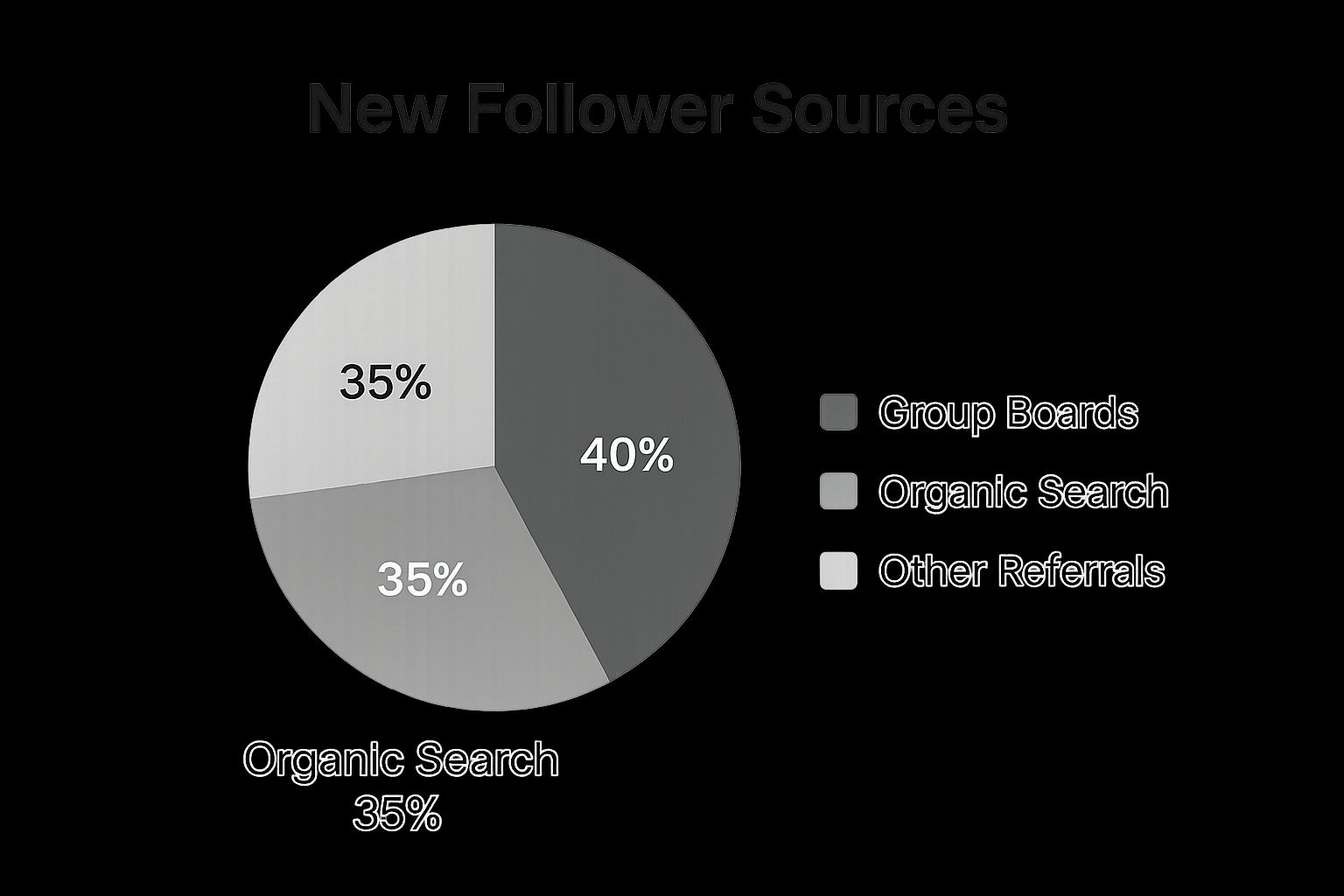
As you can see, active participation, like contributing to Group Boards, can be a major source of new followers—sometimes even more impactful than organic search.
Think Globally to Grow Your Audience
Understanding the core demographics of Pinterest’s user base is key to creating content that resonates and attracts followers from its largest and most active segments.
Pinterest Global Audience Snapshot
| Demographic Metric | Statistic |
|---|---|
| Global Users (outside US) | 80% |
| Core Age Group (Growth) | 18-34 |
With 80% of Pinners now located outside the United States, your next wave of followers might be searching in a different language or have different cultural touchstones.
Younger adults aged 18-34 are also driving the platform’s global expansion.
To tap into this massive audience, start creating Pins with universal visual appeal.
Use clear, concise text overlays that are easy to understand, no matter where someone is from.
Ultimately, community engagement is about building relationships. It humanizes your brand and transforms your account from a simple content library into a valuable hub.
When you do it right, getting a follow feels less like a transaction and more like joining an exclusive club.
To get even more specific with your engagement, understanding how hashtags work on Pinterest can help you tap into trending conversations within the community.
Refine Your Strategy with Pinterest Analytics
Creating brilliant content is just the first step. If you want to consistently grow your Pinterest followers, you have to get smart about what’s actually working. Guessing your way to success is a slow, frustrating game.
This is where your Pinterest Analytics dashboard becomes your best friend.
Think of it as a direct feedback loop from your audience, turning a jumble of data into a clear roadmap for what to create next.
It’s how you stop throwing content at the wall to see what sticks and start making strategic, informed decisions.
Decode the Metrics That Matter
Opening up your analytics for the first time can feel like a lot. To cut through the noise, let’s zero in on the numbers that have a real impact on attracting new followers.
These are the stats that tell you if you’re truly connecting with people.
- Impressions: This is how many times your Pins were shown on someone’s screen. While some dismiss this as a “vanity metric,” you can’t ignore it. High impressions mean the algorithm is noticing you and giving you a chance to be discovered. It’s the top of your funnel.
- Saves: This one is huge. When someone saves your Pin to one of their boards, they’re sending a powerful signal to Pinterest that your content is valuable and high-quality. A high number of saves tells the algorithm to show your Pin to even more people.
- Outbound Clicks: This tracks how many people clicked through from your Pin to your website. For follower growth, this metric is a great indicator that your Pin was so compelling and promised so much value that people just had to take the next step.
Think of it this way: Impressions are people window shopping, Saves are people adding an item to their wishlist, and Outbound Clicks are people actually walking into your store.
A healthy account has a good mix of all three, showing both broad appeal and deep engagement.
Find Your Top Performing Pins and Boards
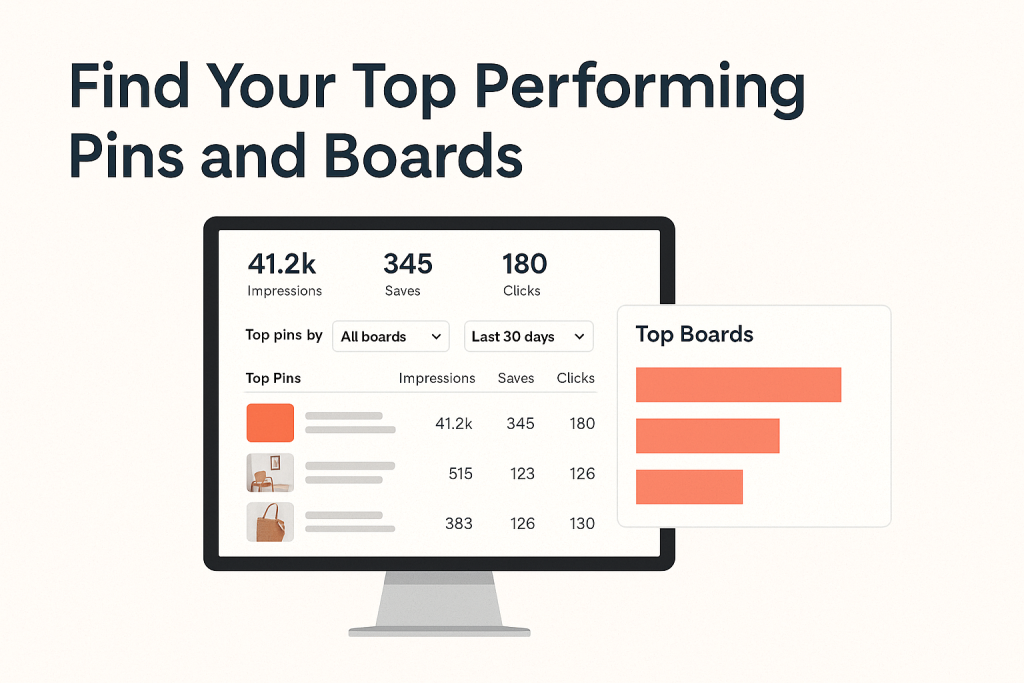
The real gold is hidden in your top-performing Pins and boards.
Your analytics dashboard lets you filter your content to see exactly what’s hitting home with your audience, and this is where you can start spotting powerful patterns.
Take a hard look at your most popular content.
Do your top Pins all share a certain visual style?
Are they all about solving one particular problem?
Do they fall under one of your main content pillars?
Answering these questions gives you a data-backed blueprint for what to create next.
For example, if you notice your five best Pins are all quick video tutorials packaged as Idea Pins, that’s a massive clue.
Your audience is practically shouting that they love that format and topic. The next logical move? Make more of it!
This data-driven approach is more important than ever, especially considering how Pinterest is evolving.
The platform grew from 518 million to 570 million monthly active users between Q1 2024 and Q1 2025—a 10% jump.
What’s really interesting is that 42% of this audience is now Gen Z, a group whose usage grew by 18% in 2025 alone.
You can dig deeper into these shifts by reading the full findings on Pinterest’s evolving user base.
Conduct a Monthly Analytics Check-In
To make this feel less like a chore, I recommend blocking off just 30 minutes at the start of each month for a quick analytics review. It’s a small time investment with a huge payoff.
Here’s a simple routine to follow:
- Pinpoint Your Top 5 Pins: Jot down their topic, format (Standard, Video, Idea), and any common visual elements.
- Find Your Top 3 Boards: Which of your curated collections are getting the most attention and saves?
- Look for the Pattern: What do your winners have in common? Is there a theme, a color palette, a type of headline?
- Create an Action Plan: Based on what you’ve learned, brainstorm 3-5 new Pin ideas that build on that success.
This regular check-in creates an incredibly powerful feedback loop.
You’re no longer just creating content and hoping for the best; you’re strategically refining your approach based on what your audience has already told you they love.
It’s this consistent, data-informed tweaking that separates accounts that feel stuck from those that see steady, predictable growth.
Turn Pinterest Searches Into New Followers
Want more of the right people to find and follow you on Pinterest?
That starts with using the same words they type into the search bar every day.
Instead of guessing, you can use a free tool that shows real Pinterest keywords for your niche.
Just enter a topic, see the exact phrases people are searching for, and use those words in your profile, boards, and Pin titles.
It’s a simple way to get more saves, more clicks, and more followers without working extra hours.
Common Questions About Growing on Pinterest
When you decide to get serious about Pinterest, the questions can feel endless. It’s easy to get stuck in the weeds, wondering what really works and what’s just noise.
I’ve been there, and over the years, I’ve heard the same questions pop up again and again.
Let’s clear up that confusion with some straight-up answers based on real-world experience.
The most important thing to do first? Set realistic expectations. So many people get discouraged because their starting point looks nothing like someone else’s years-in-the-making success.
Pinterest is a marathon, not a sprint.
1. How Long Does It Take to See Real Follower Growth?
This is the million-dollar question, and the honest-to-goodness answer is: it depends. That said, most people who consistently stick to a solid strategy start seeing real, meaningful traction within 3 to 6 months.
“Consistent” is the magic word. It means you’re pinning high-quality content regularly, you’ve done your keyword homework, and you’re actively participating on the platform.
Growth is slow at first while the Pinterest algorithm figures you out, but once your best Pins start getting traction, you’ll hit a tipping point where momentum starts to build itself.
2. How Many Pins Should I Post Per Day?
It’s tempting to think more is always better, but that’s a classic Pinterest trap. Forget about volume and focus on quality over quantity.
I’ve found that aiming for 1 to 5 new, genuinely good Pins per day is far more powerful than flooding the platform with 20 so-so designs.
A common misconception is that you need a huge volume of Pins to grow. In reality, a handful of well-designed, keyword-rich Pins will outperform a mountain of poorly made ones every single time.
Your goal is to create valuable assets, not just fill a quota.
Find a posting rhythm you can actually stick with long-term without burning out or compromising on quality.
That’s the kind of consistency the algorithm loves to see.
3. Should I Repin Old Content or Only Create New Pins?
You need a healthy mix of both. Pinterest is all about fresh content, which is fantastic news.
This means you can create new Pin images—with totally different designs, headlines, and descriptions—that all link back to the same blog post or product.
It’s a killer strategy for promoting your best stuff over and over without being repetitive.
But don’t forget that Pinterest is still a social network at its core. Sprinkling in some high-quality, relevant content from other creators shows you’re a valuable resource in your niche, not just a self-promoter.
For a more detailed look at this, our complete guide on how to grow Pinterest followers breaks down content-mixing strategies.
4. Do Followers Even Matter on Pinterest?
Yes, they absolutely do—just maybe not in the way you think. A lot of your traffic will come from people who find you through search, but a solid follower base gives your new Pins an immediate boost.
When your followers save your fresh Pin right after you post it, it’s a huge green light for the Pinterest algorithm.
It signals that your content is high-quality, which triggers Pinterest to show it to a much wider audience. Think of your followers as your personal launch crew, giving your content the initial push it needs to take off.